Character file
Meet the goblin in the label
The Gallery Label Goblin is not evil. He is worse: he is helpful at the wrong time. He wants you to read the wall label before you have actually looked at the art. He loves names, dates, locations, materials, donors, accession numbers, and any sentence containing the phrase “possibly attributed to.”
FineArtDaily keeps him around because he knows the museum’s secrets. The trick is to make him wait his turn.
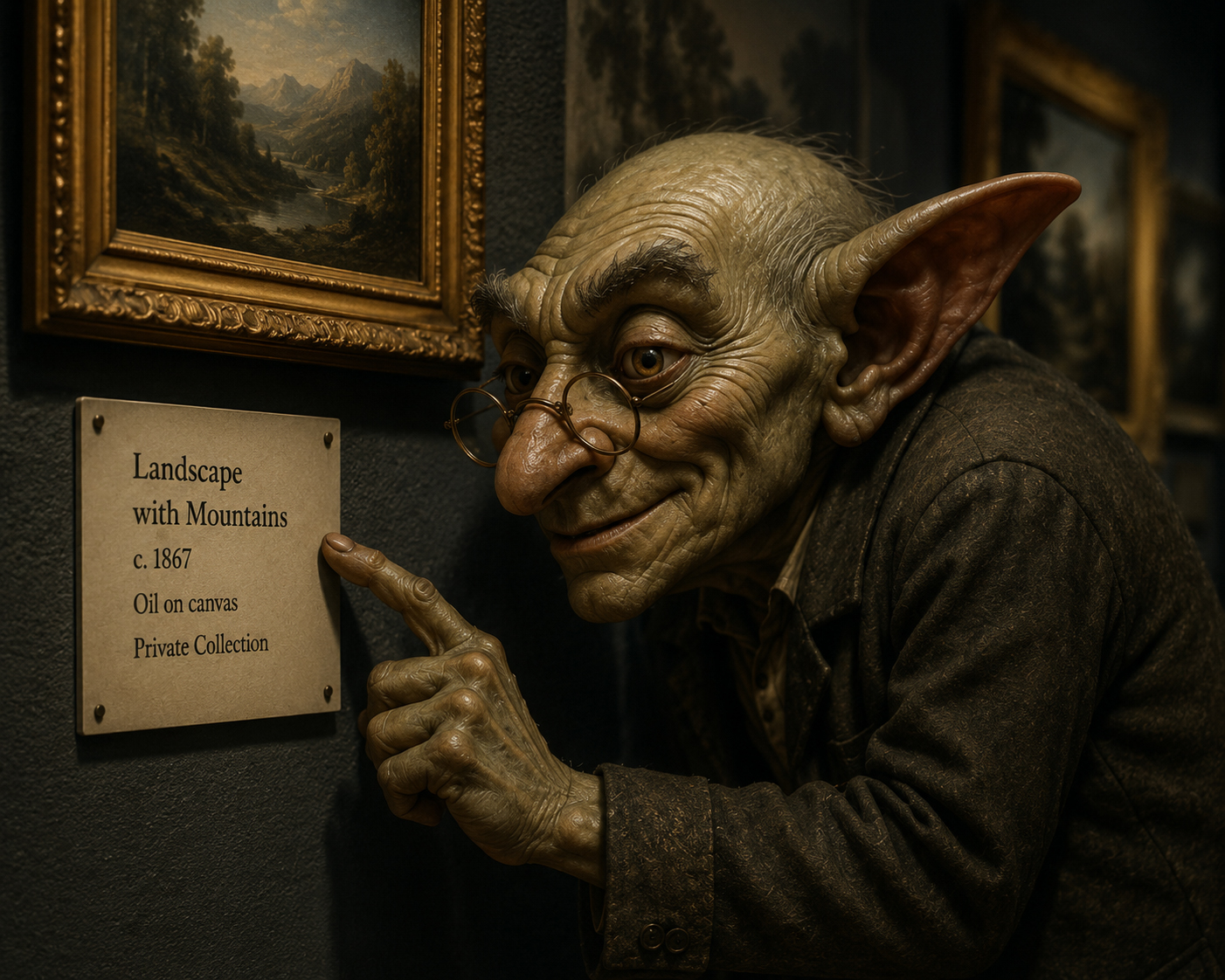
Role
Keeper of tiny text, suspicious dates, and useful clues.
Habitat: lower right corner of the frame, usually next to a label printed in tasteful museum gray.
Power: can turn one small caption into a better question.
Weakness: visitors who look at the painting first.
The main rule
Do not start with the label. Start with the artwork. Give the painting ten quiet seconds before the goblin gets to talk.
Notice the face, light, pose, mood, color, size, and the weird thing you cannot explain yet.
Now check artist, title, date, place, medium, and museum notes. Let the label answer one question, not all of them.
Return to the image. The best label makes the artwork bigger, not smaller.
What museum labels are really saying
A good label is a compressed detective board. It gives you just enough to locate the work in time, technique, and culture. It should not replace your eyes.
Artist: Unknown painter, active in a very dramatic century
Portrait of Someone Pretending Not to Have Secrets
Oil on panel, probably after lunch, public-domain era
Gift of a patron who wanted everyone to know they had excellent taste.
Five label clues worth noticing
The name matters, but “Unknown” can be interesting too. Anonymous art still has style, labor, and history.
A date tells you what else was happening: wars, courts, trade, science, religion, fashion, printing, photography.
Oil, tempera, ink, bronze, ceramic, textile, paper, mosaic — the material explains the risk and the craft.
Where it was made can change the entire story: workshop, court, monastery, studio, port city, colony, trade route.
Ownership history can reveal power, taste, theft, rescue, collecting, restitution, and museum politics.
The goblin loves this one. It is mostly for the museum, but it can help you find the official record later.
Goblin warning: a label is not the artwork’s final answer. It is a flashlight. Useful, portable, and terrible when pointed directly into your eyes.
Common label traps
The first trap is treating the label as a test. You are not failing the museum if you do not recognize the artist. The second trap is treating the label as a verdict. A label can summarize, but it cannot fully contain the work.
The third trap is reading every label with equal intensity. Museums are large. Your attention is not infinite. Choose the labels attached to works that actually stop you.
The FineArtDaily label method
- Stand far enough back to see the whole image.
- Name three things you notice before reading anything.
- Read the title, date, medium, and one sentence of explanation.
- Ask: “What changed after I read that?”
- Move closer and look for one detail the label did not mention.
Best next museum-world pages
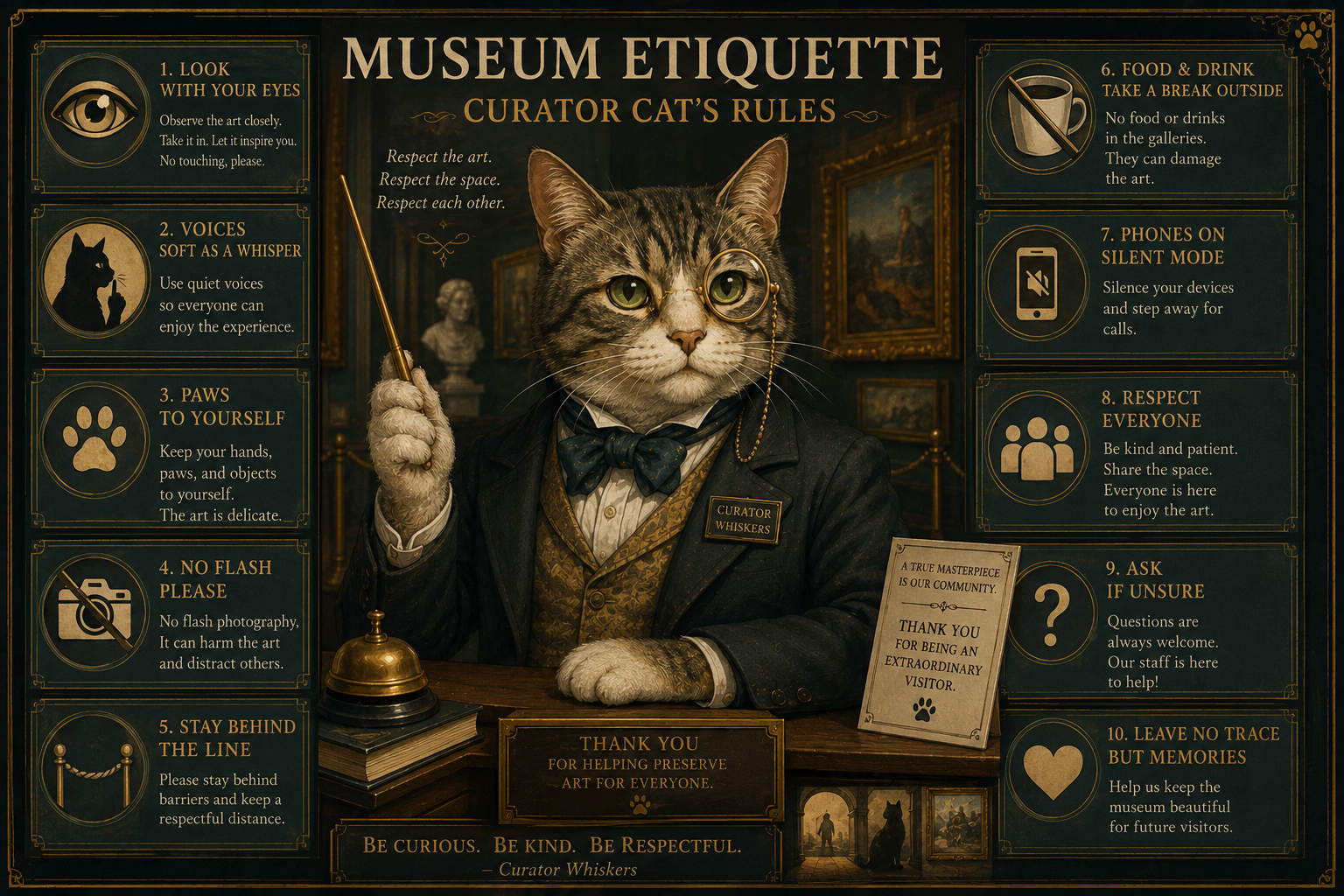
Museum Etiquette
Curator Cat explains how to behave without becoming the loudest object in the room.
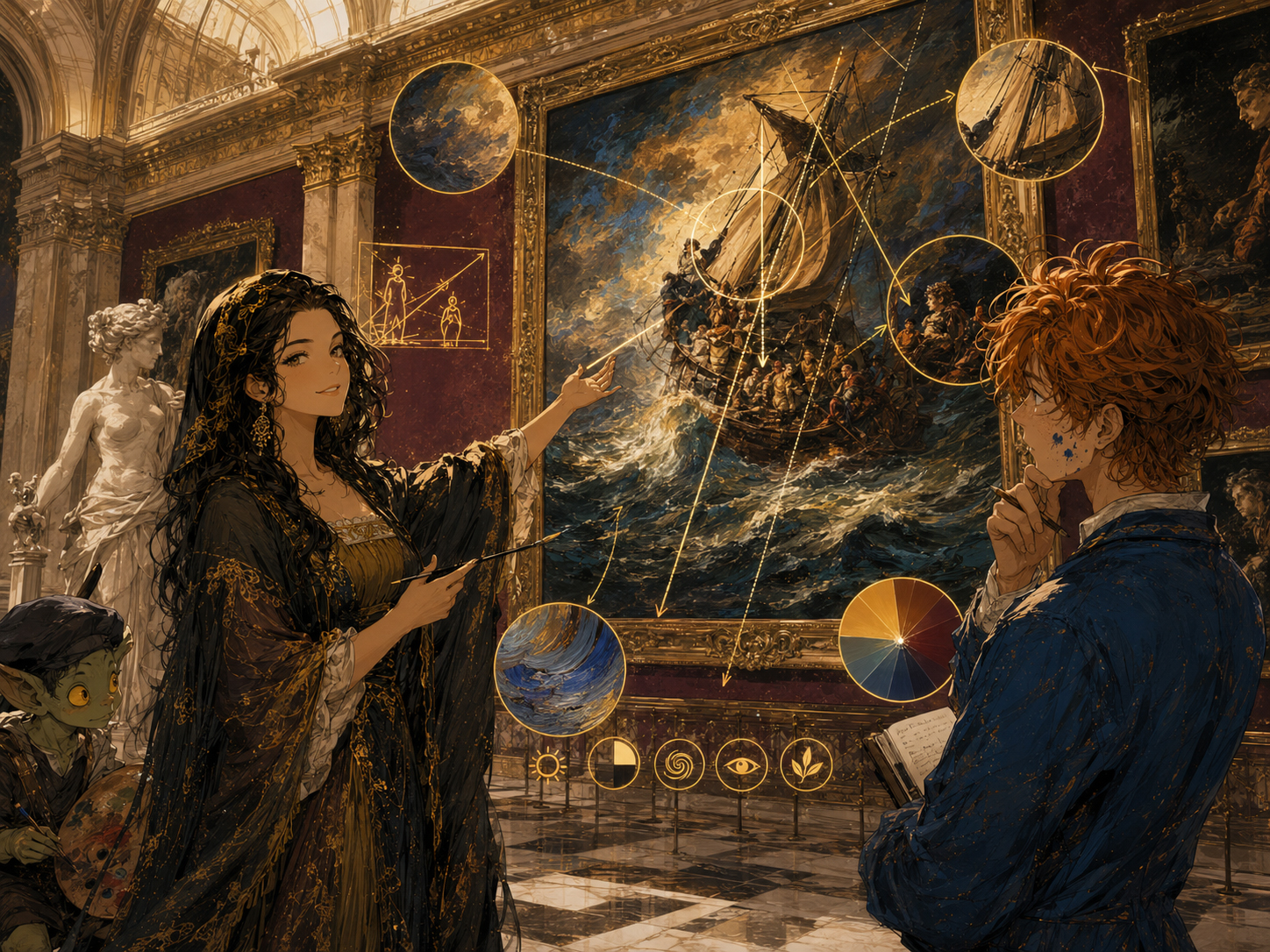
How to Look at Art
The practical guide: slow down, notice first, explain second.

Sources
Where FineArtDaily checks public-domain and open-access art history.
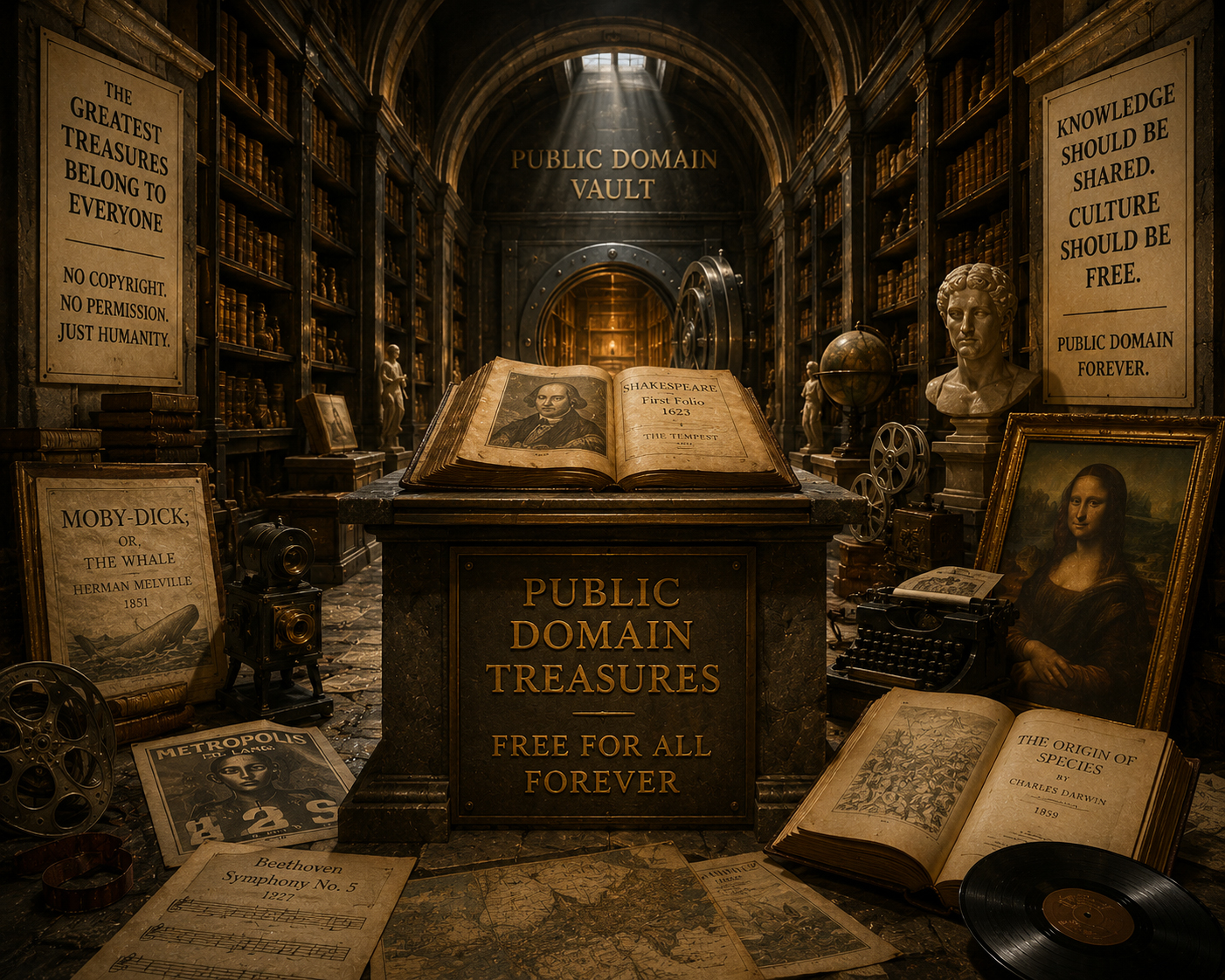
Public Domain Vault
Why old art can still feel new — and why image licenses still matter.
One-minute label reading script
“I notice the image first. I read the title and date. I check the medium. I ask why the museum thought this was worth explaining. Then I look again for the detail the label did not solve.”
Public-domain note: FineArtDaily uses original manga/editorial illustrations inspired by public-domain art history and museum culture. Before using direct museum reproductions, always check the specific institution’s image-use terms.