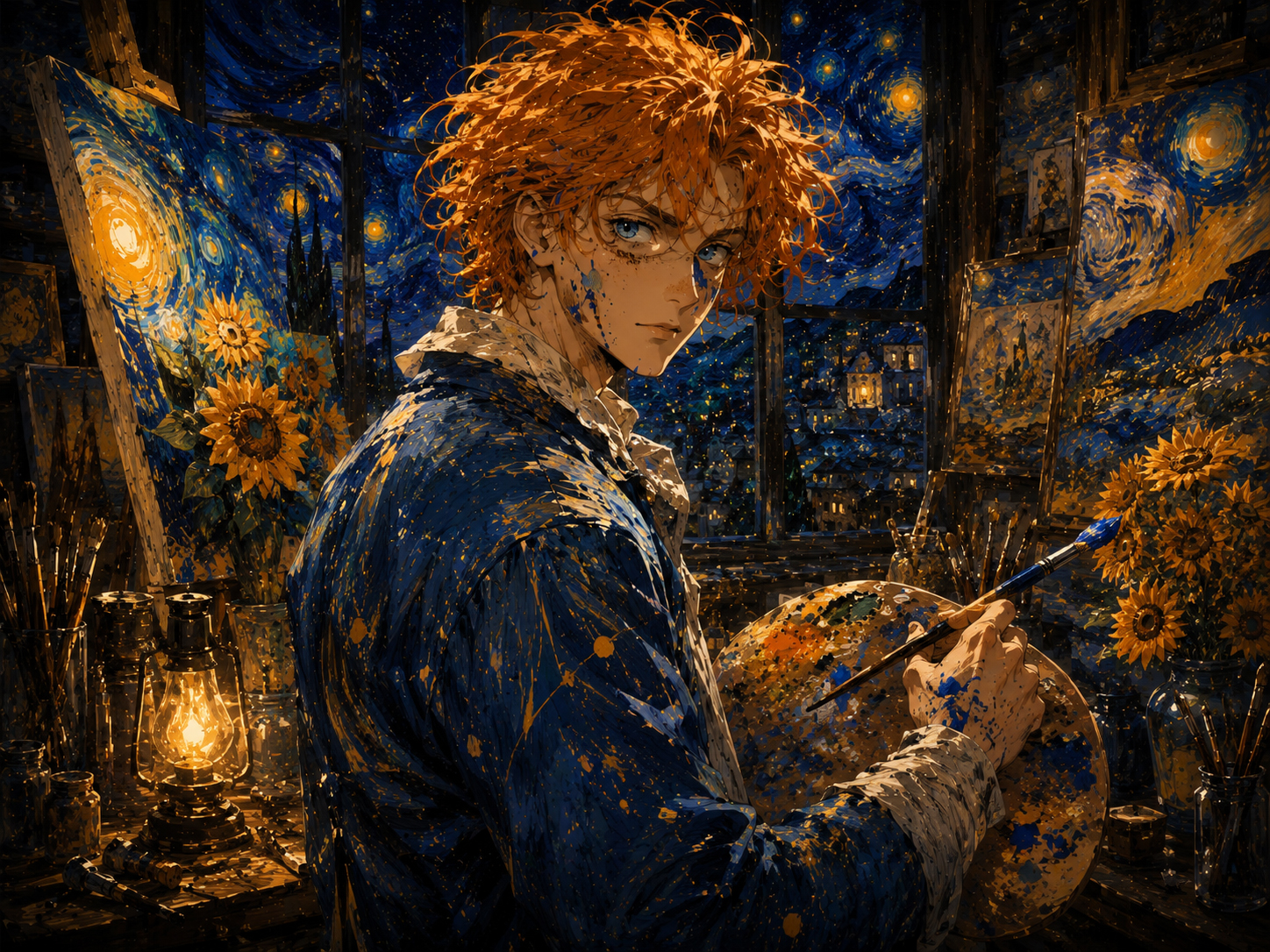
FineArtDaily cast
The boy who sees motion in everything.
Van Gogh Boy appears whenever a visitor says a painting is “not realistic enough” and the room needs a friendly thunderbolt. He points to the brushstrokes, the color temperature, the vibrating edges, and the way a painted sky can feel more alive than a photograph.
His main lesson is that art does not have to copy the world politely. Sometimes art tells the truth by bending color, thickening paint, exaggerating rhythm, and letting emotion steer the composition.
Profile card
Official title
Junior Master of Swirling Skies, Yellow Rooms, Emotional Brushwork, and Dramatic Florals.
Signature move
The star spiral: a sudden visual vortex that turns a quiet scene into a living pulse of color and line.
Favorite question
“What is the painting doing with color that ordinary eyesight does not?”
Natural enemy
Flat beige walls, timid palettes, and anyone who thinks brushstrokes should apologize.
What Van Gogh Boy teaches
He teaches expressive seeing. In his world, blue can ache, yellow can shout, green can tremble, and a field of irises can feel like music. He is less interested in whether a painting looks like a place and more interested in whether the painting makes the place impossible to forget.
In FineArtDaily stories, Van Gogh Boy helps readers notice the physical life of paint: strokes, dabs, outlines, pressure, direction, pattern, thickness, and repetition. The surface is not just decoration. It is the heartbeat.
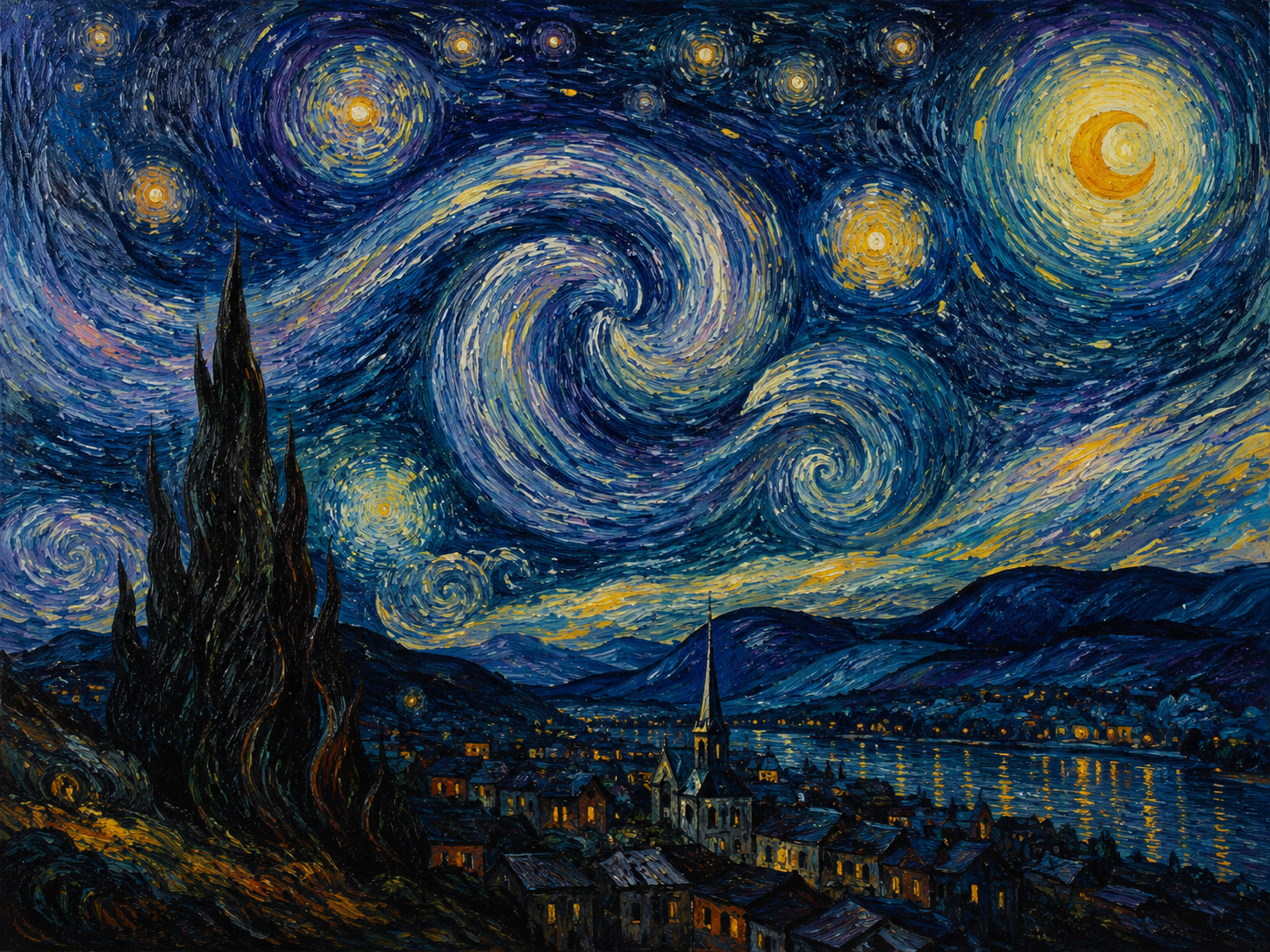
The star spiral
Night becomes rhythm. The sky is not background; it is the main character conducting the whole scene.
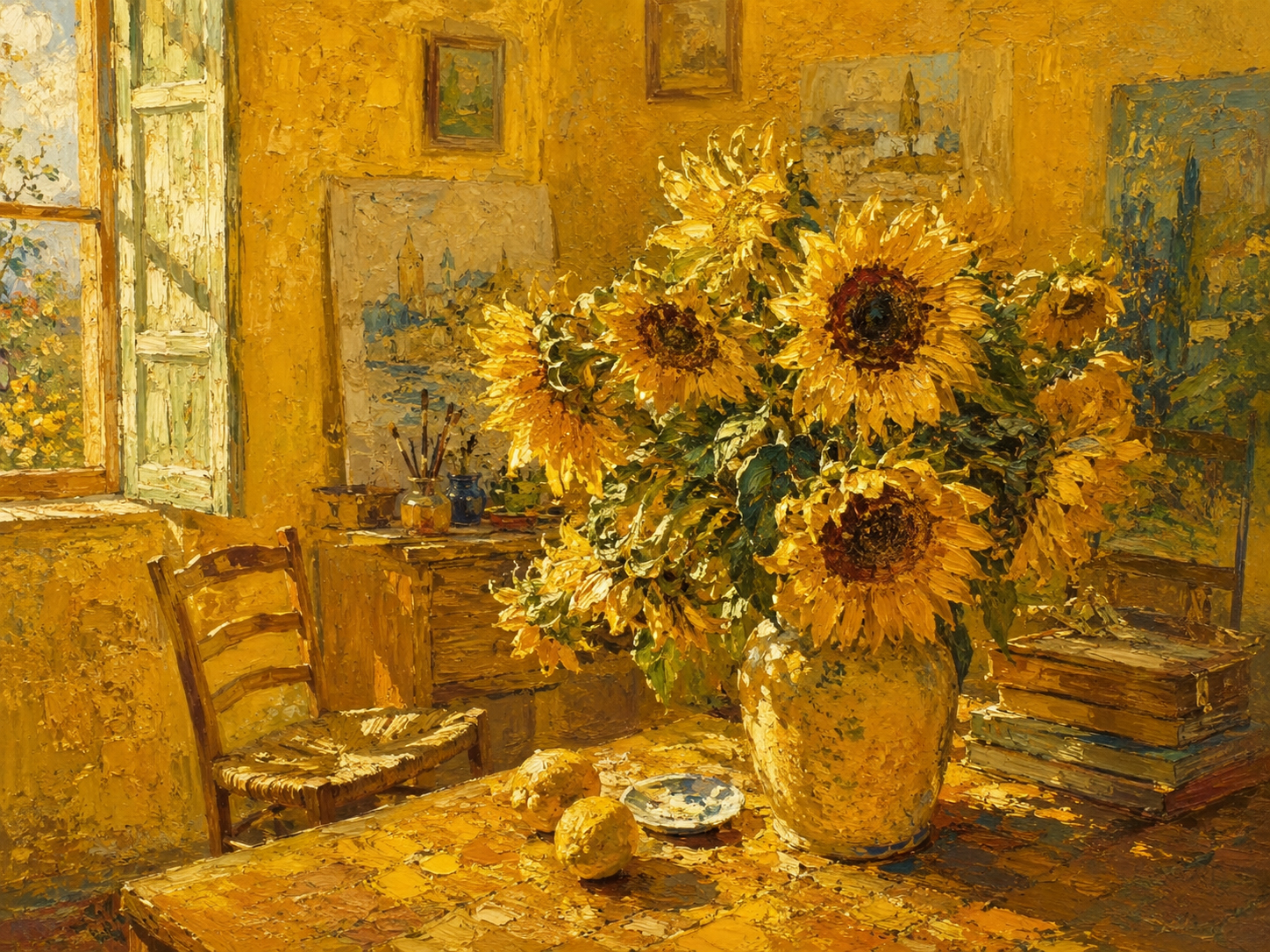
The yellow room
Color does emotional work before it does descriptive work. Yellow can welcome, blaze, comfort, or overwhelm.
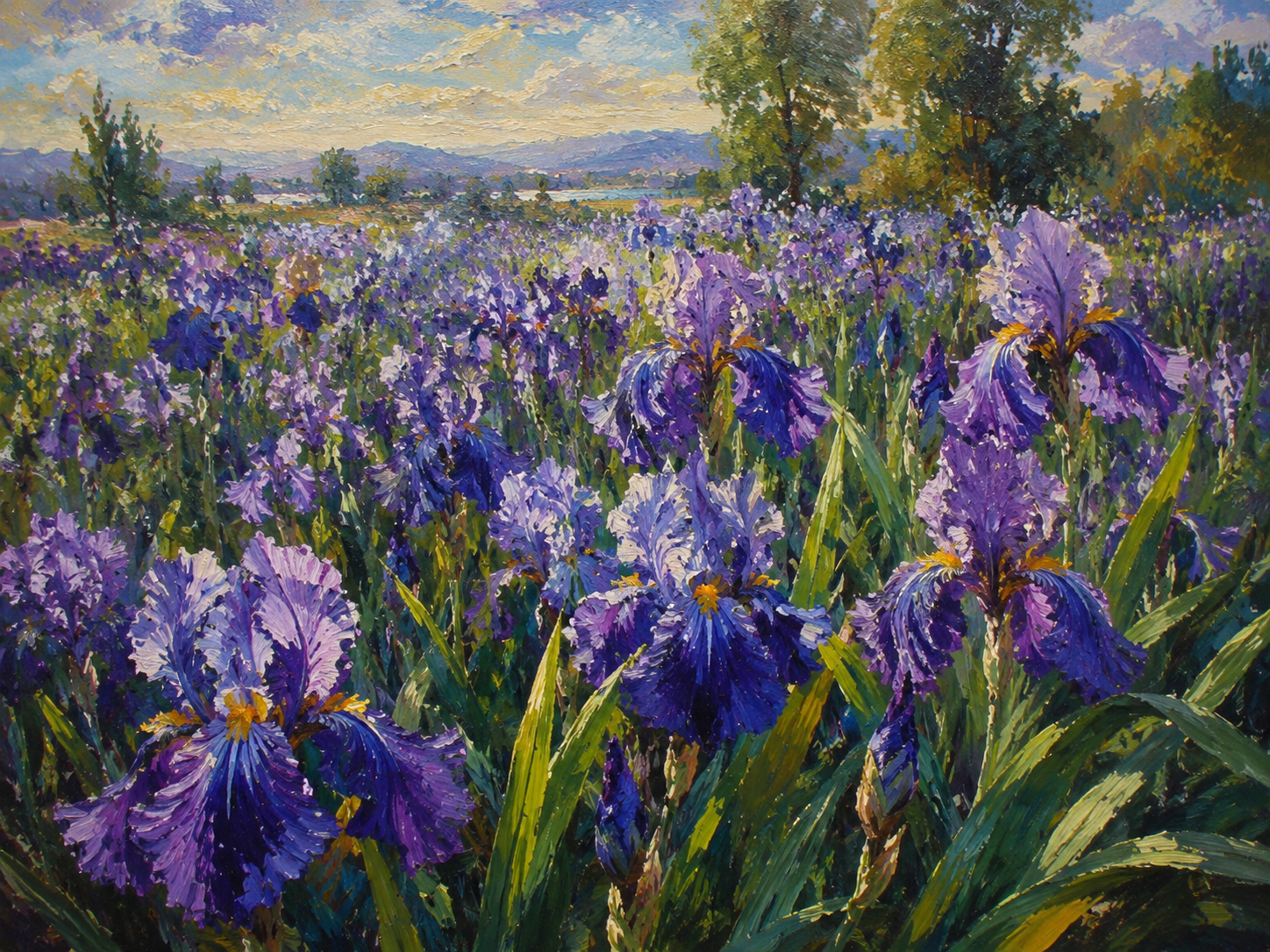
The flower field
Flowers are not just pretty. They are structure, pattern, contrast, movement, and mood packed into petals.
Role in the FineArtDaily universe
Van Gogh Boy is the museum’s emotional weather system. Mona Lisa Sensei slows everyone down. Professor Perspective straightens the room. Curator Cat enforces the rules. Palette Goblin steals the blue. Van Gogh Boy takes all that order and asks whether the painting still has a pulse.
He is especially useful in stories about Post-Impressionism, color theory, expressive line, painterly surfaces, artist studios, night skies, gardens, and the difference between copying appearance and communicating experience.
Episode appearances
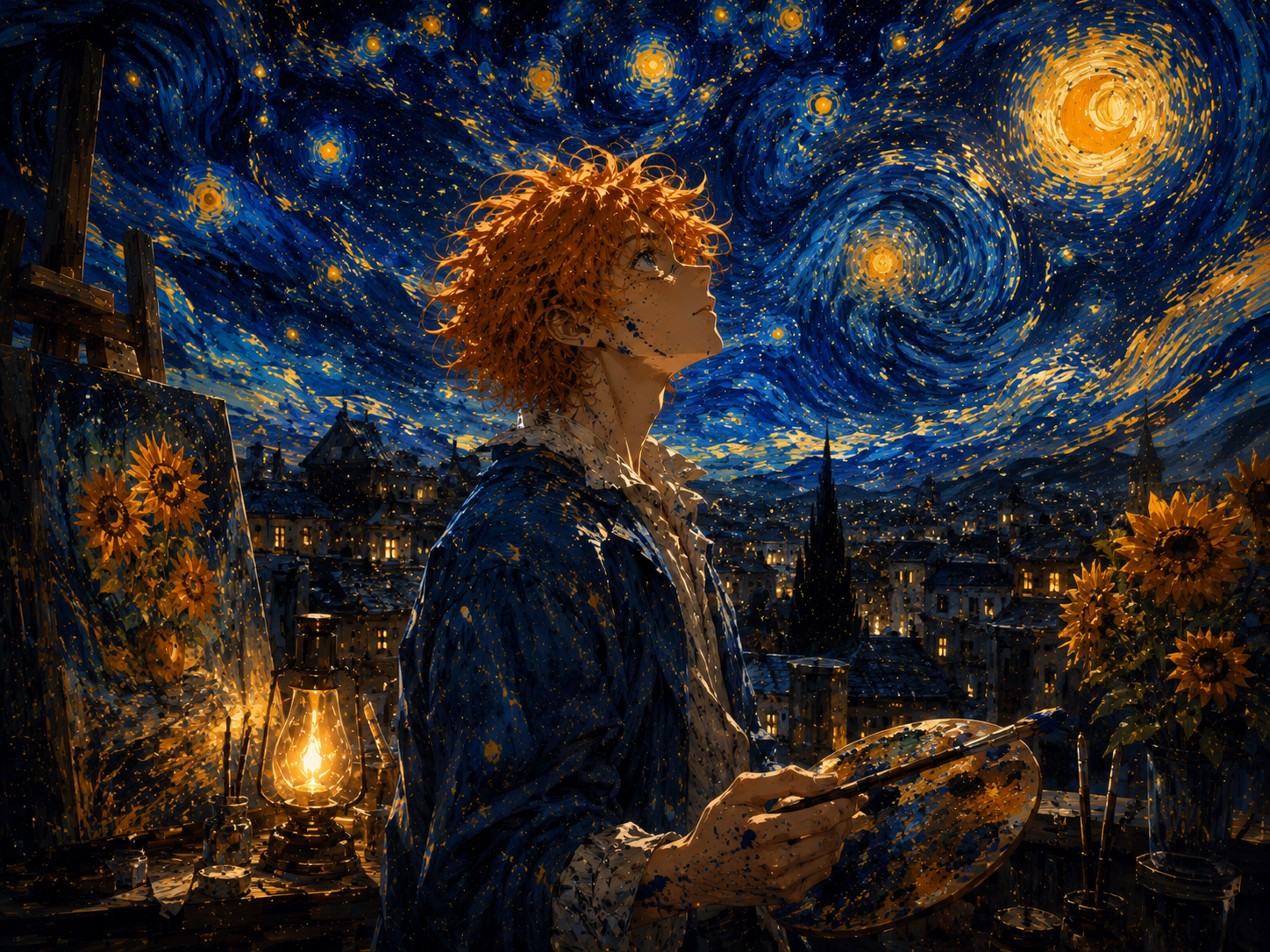
Episode 3: Van Gogh Boy Sees the Stars
The museum tries to dim the room. Van Gogh Boy turns the ceiling into a sky lesson.
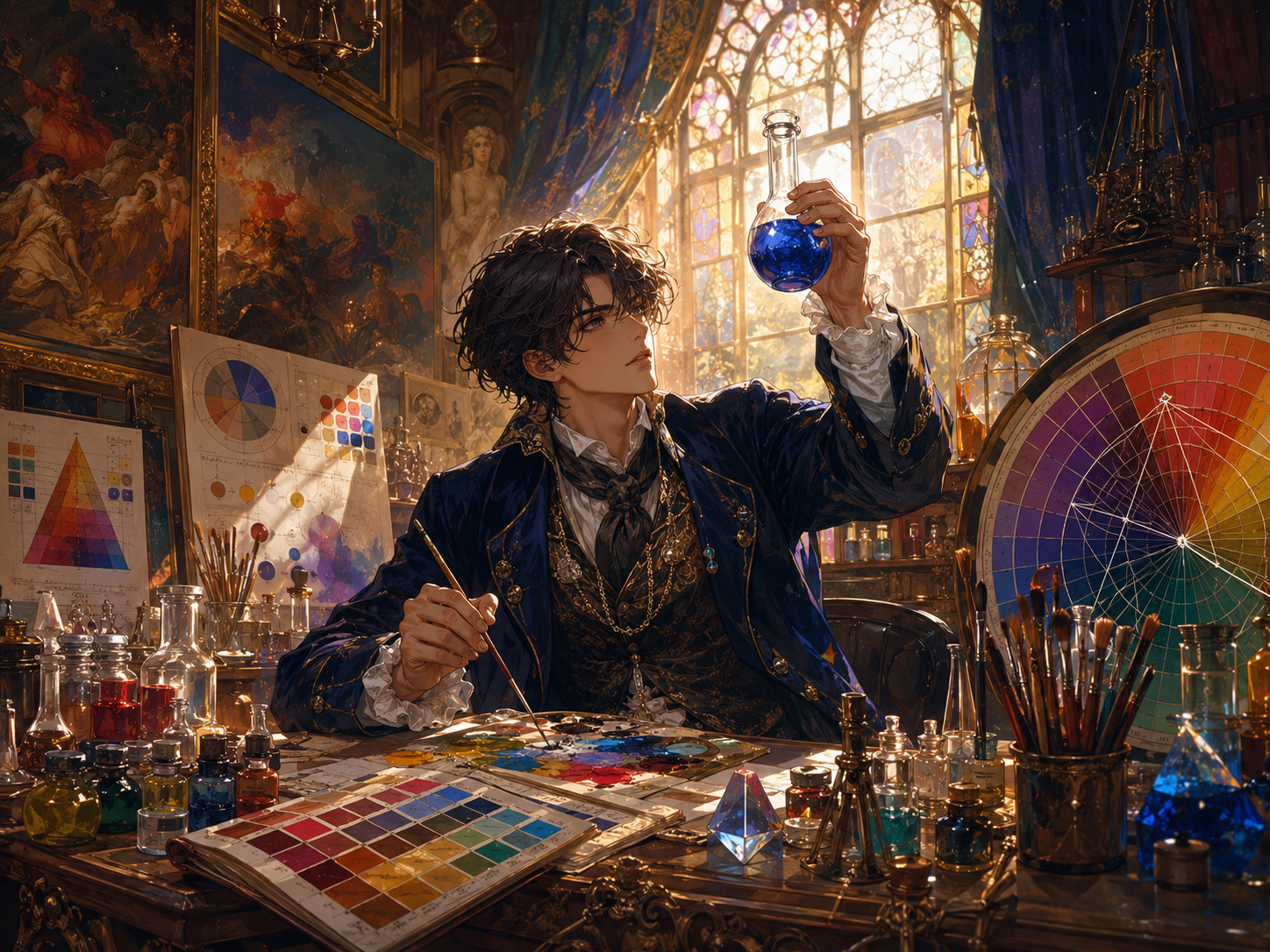
Color Theory
Hue, value, saturation, temperature, contrast, and harmony — without draining the life out of color.
Van Gogh Boy’s five rules
- Follow the brushstroke. Direction and pressure tell you how the image moves.
- Ask what color feels like. Color is not only identification. It is atmosphere, mood, and force.
- Notice repetition. Repeated marks can turn still objects into rhythm.
- Let distortion speak. When artists bend the world, ask what truth the bend reveals.
- Stand close, then step back. The painting is both a surface of marks and a world of feeling.
Next character
Palette Goblin is already in the storeroom with a stolen tube of blue and absolutely no remorse.