FineArtDaily field note
What Modern Art is
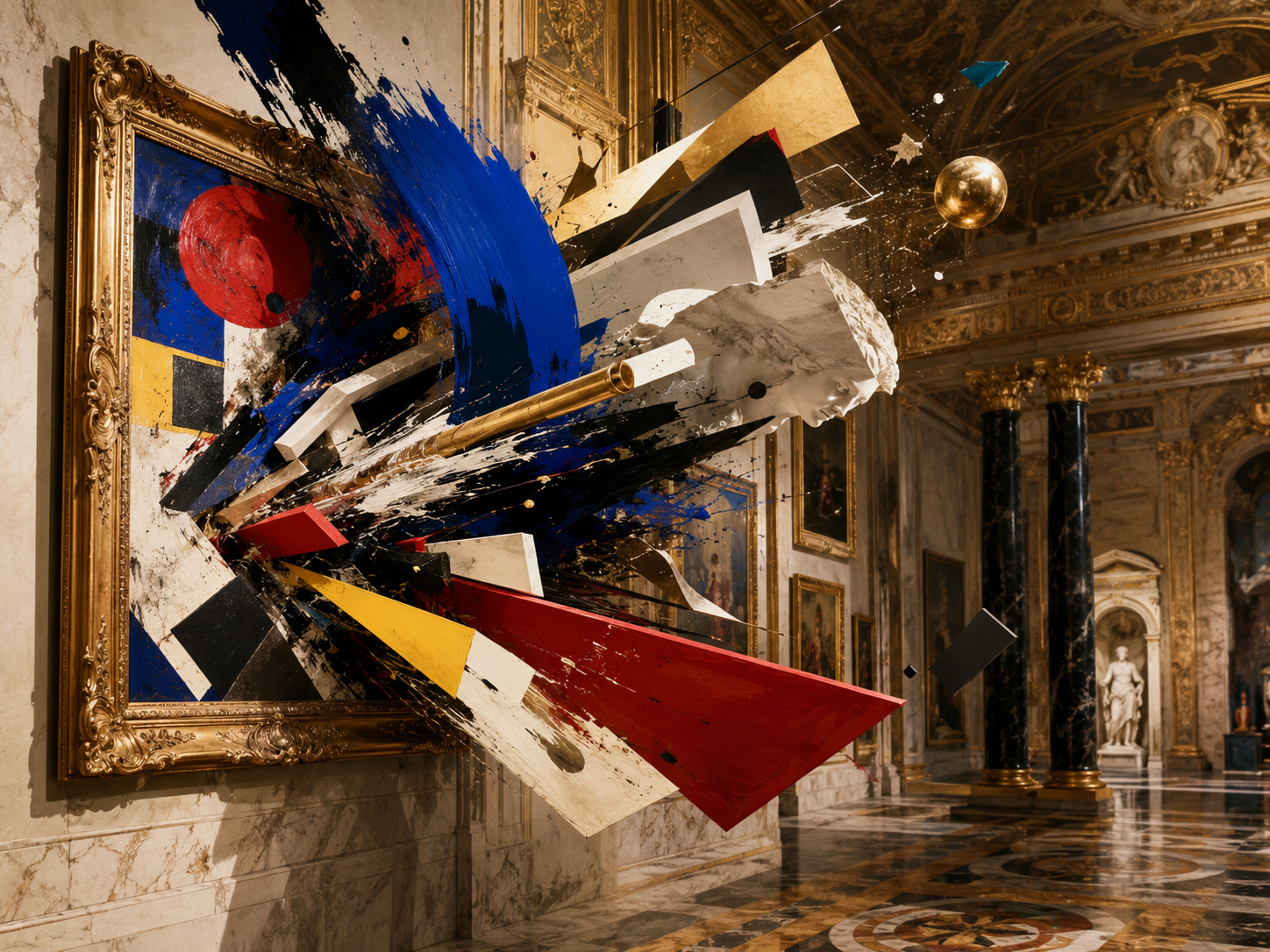
Modern Art is not one single style. It is a long argument with the old rules of art. Instead of treating painting as a polished illusion of reality, modern artists experimented with color, shape, materials, speed, psychology, technology, war, cities, machines, dreams, and the strange feeling of living in a rapidly changing world.
Why artists started breaking things
By the late nineteenth and early twentieth centuries, artists were surrounded by change: photography, trains, electricity, factories, newspapers, cinema, global trade, political upheaval, and new scientific ideas about perception. If cameras could record appearances, painters could chase something else: structure, emotion, motion, inner life, and pure visual energy.
Modern Art often looks rebellious because it is. But the best modern art is not random. It breaks a rule because it wants a stronger way to see.
How to look at Modern Art
- Do not start with “what is it?” Start with what it does: calm, attack, confuse, vibrate, flatten, stretch, joke, or haunt.
- Look for the broken rule. Is perspective gone? Is color unnatural? Is the subject fragmented? Is the frame being challenged?
- Ask what became more important than realism. Shape, mood, rhythm, idea, material, symbol, or gesture may now be the main character.
- Notice the era. Modern Art carries cities, machines, wars, mass media, psychology, and speed in its bones.
- Give it time. Some modern works do not unlock with one glance. They argue with you first.
Four doors into Modern Art
Modern Art has many branches, but four FineArtDaily doors are especially useful: color, structure, dream logic, and abstraction.
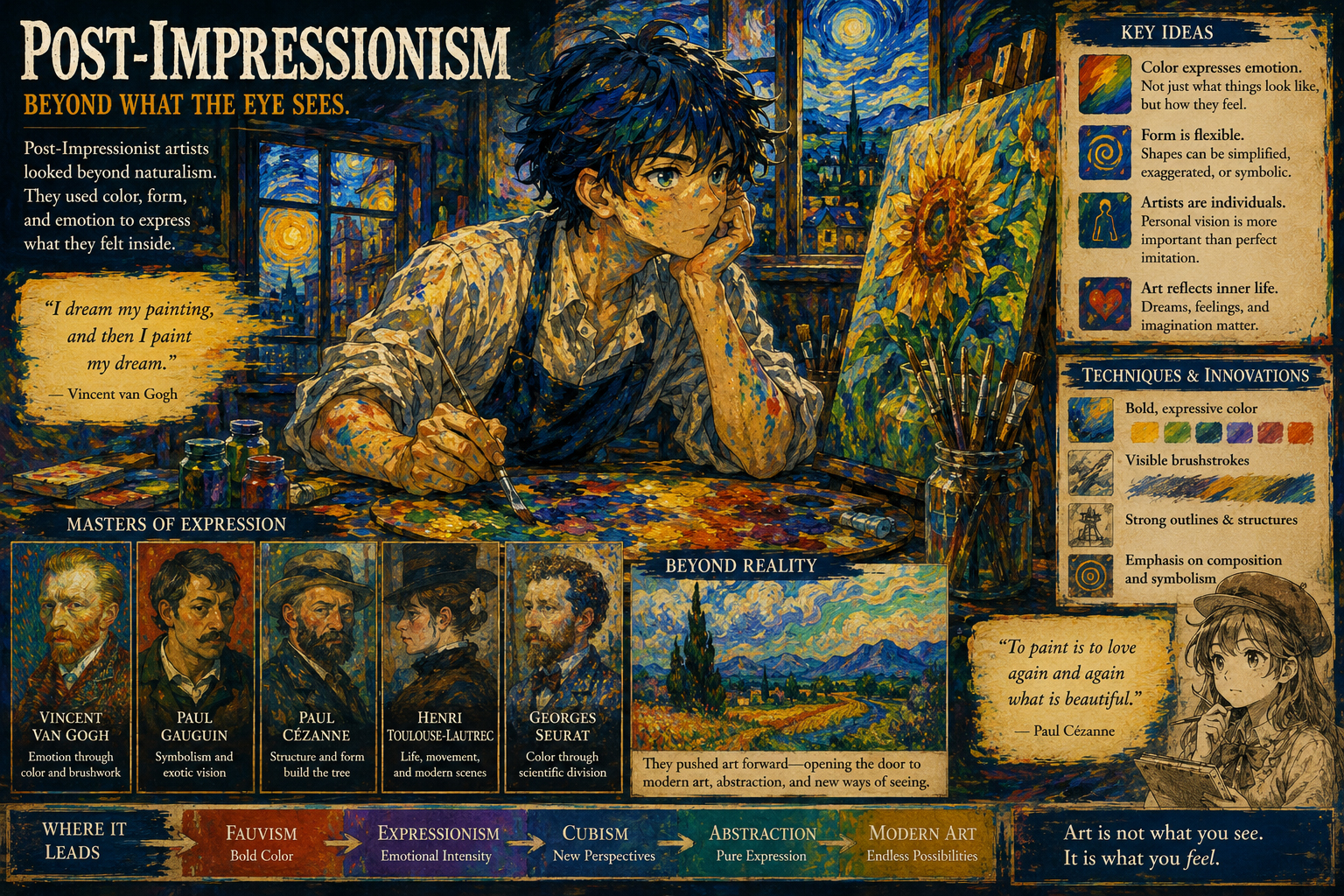
Color becomes emotion
Post-Impressionism pushes beyond observed light into personal vision, symbolic color, and emotional intensity.
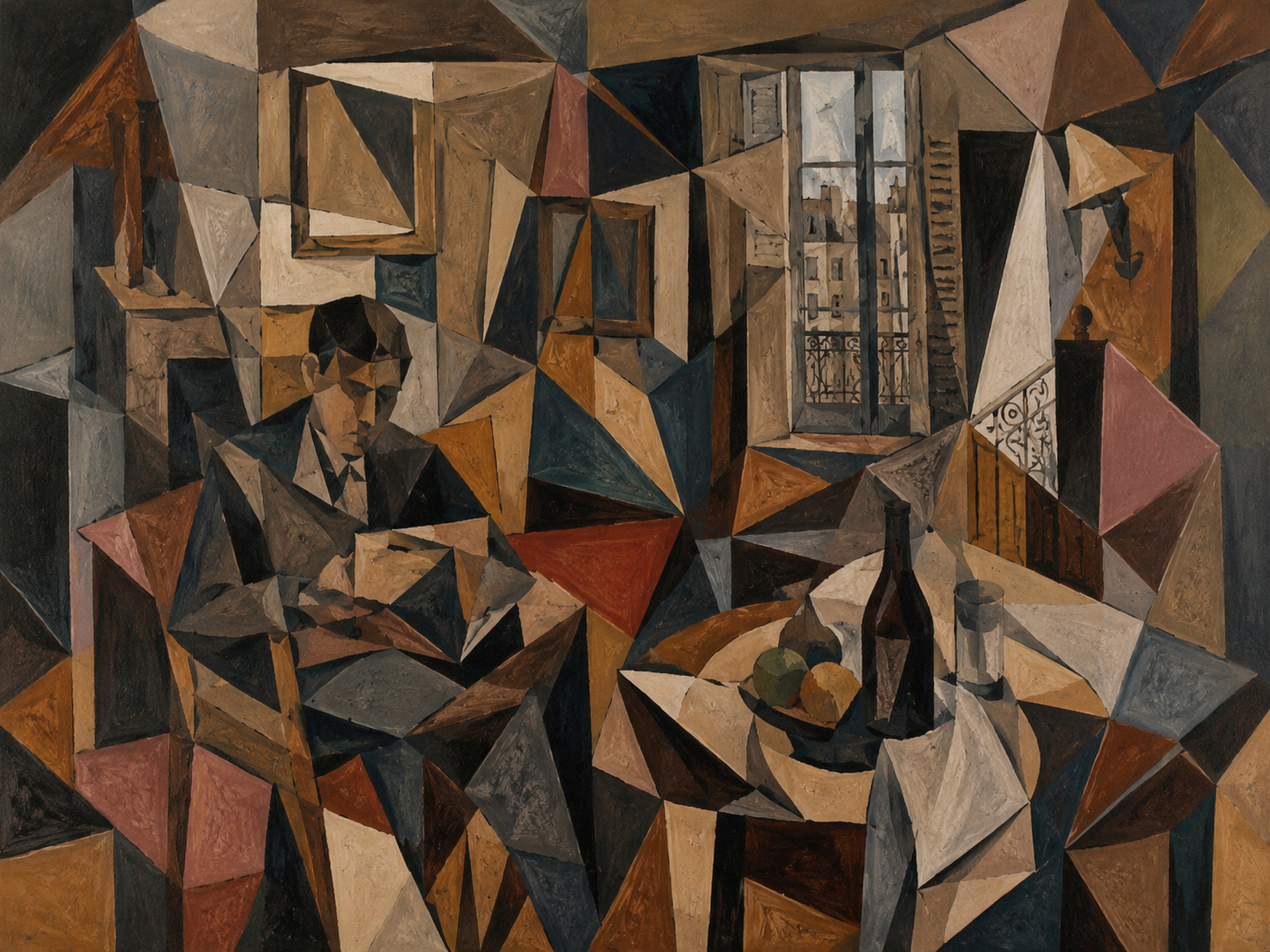
Space gets folded
Cubism refuses the single fixed viewpoint. A room can be front, side, top, memory, and argument all at once.
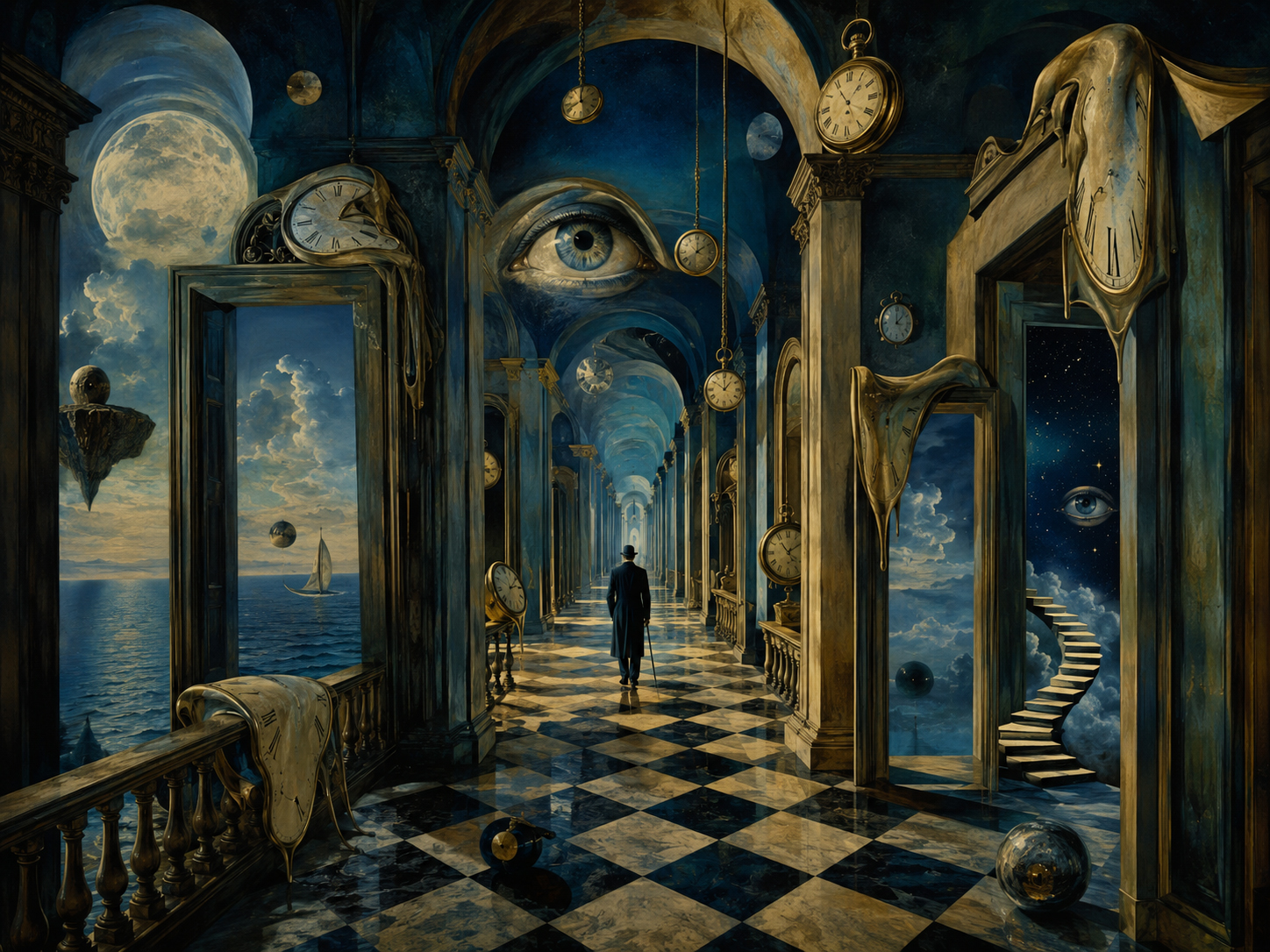
Dream logic enters
Surrealism lets the unconscious take the museum keys. The impossible becomes weirdly persuasive.
Subject leaves the building
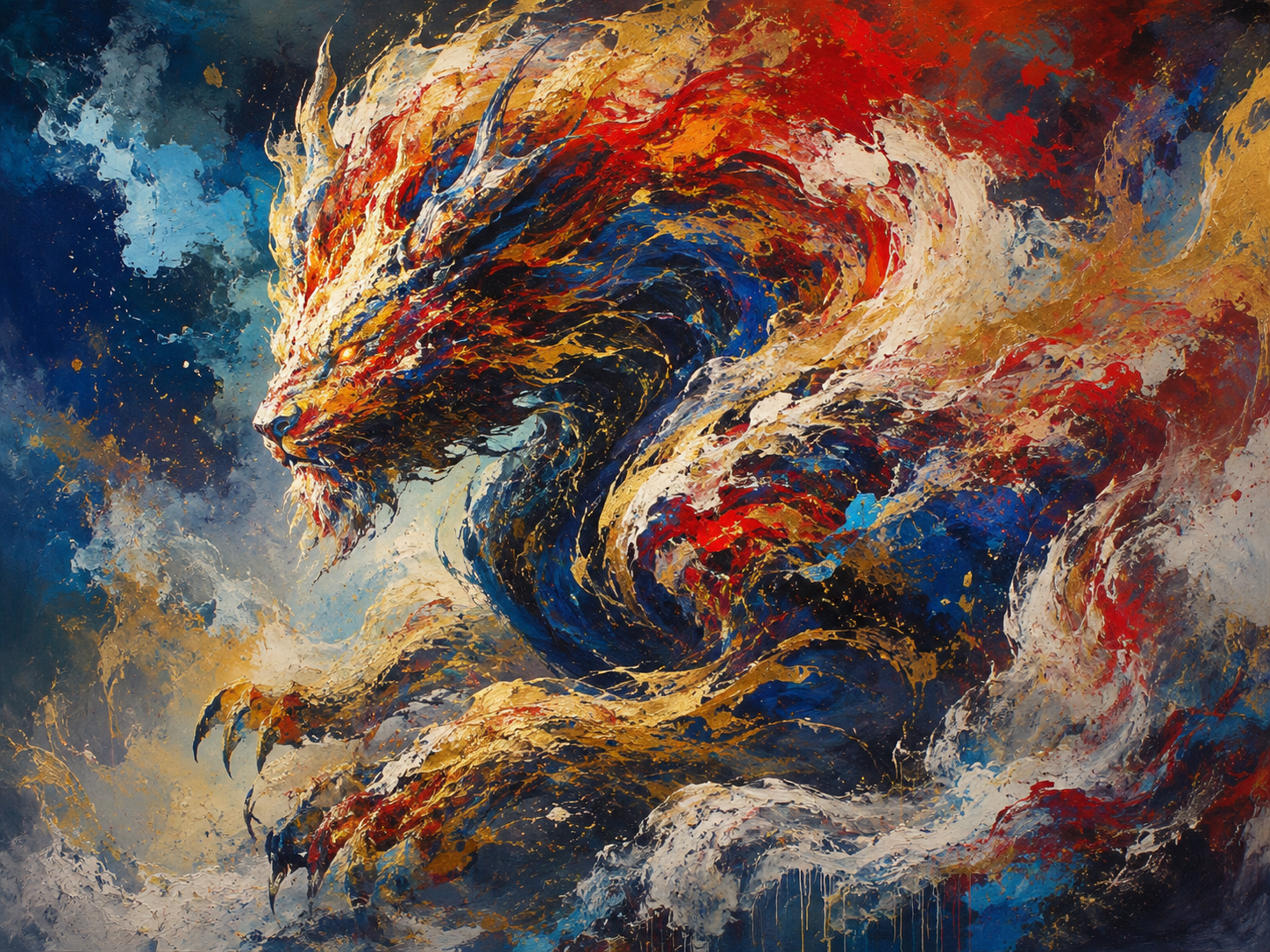
Abstract art can make line, shape, color, rhythm, and material carry the whole experience.
The “my kid could do that” problem
Modern Art attracts the famous complaint: “My kid could do that.” Sometimes the better question is: could your kid make the art world argue for a century? Simplicity is not the same as laziness. A spare modern image may be reducing art to its pressure points: color, balance, shock, rhythm, or concept.
That does not mean every modern artwork is automatically great. FineArtDaily rule: do not pretend. Ask what the work is trying to change, what visual choices create that effect, and whether the result still has force after the first surprise.
The FineArtDaily manga cast
Modern Art is where the museum cast gets loud. The Cubist Fox folds a room into geometry. The Surreal Clock Rabbit runs late through impossible corridors. The Abstract Dragon arrives whenever realism gives up and color grows teeth.
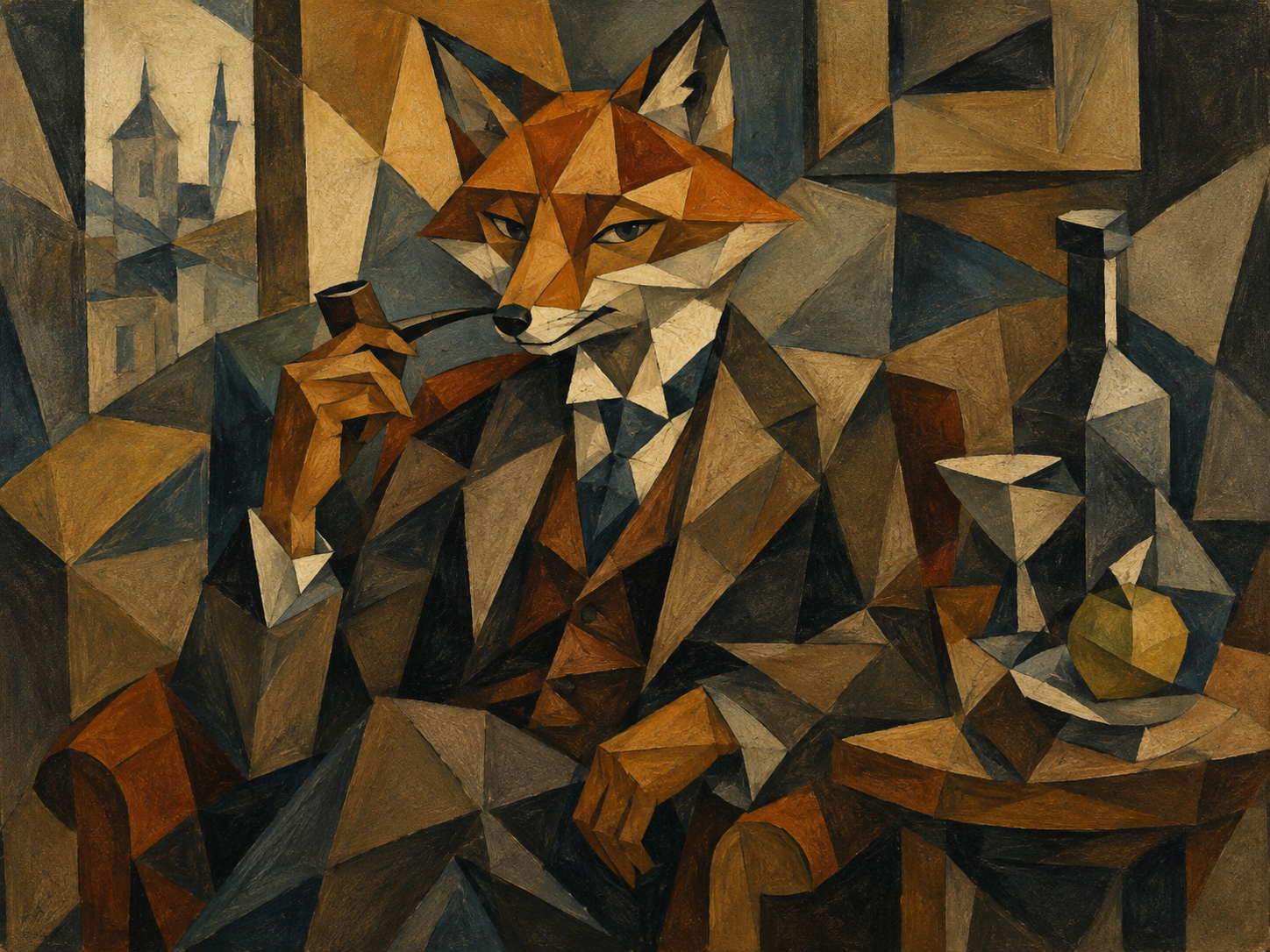
Cubist Fox
Sees every object from five angles and still says the table is suspicious.
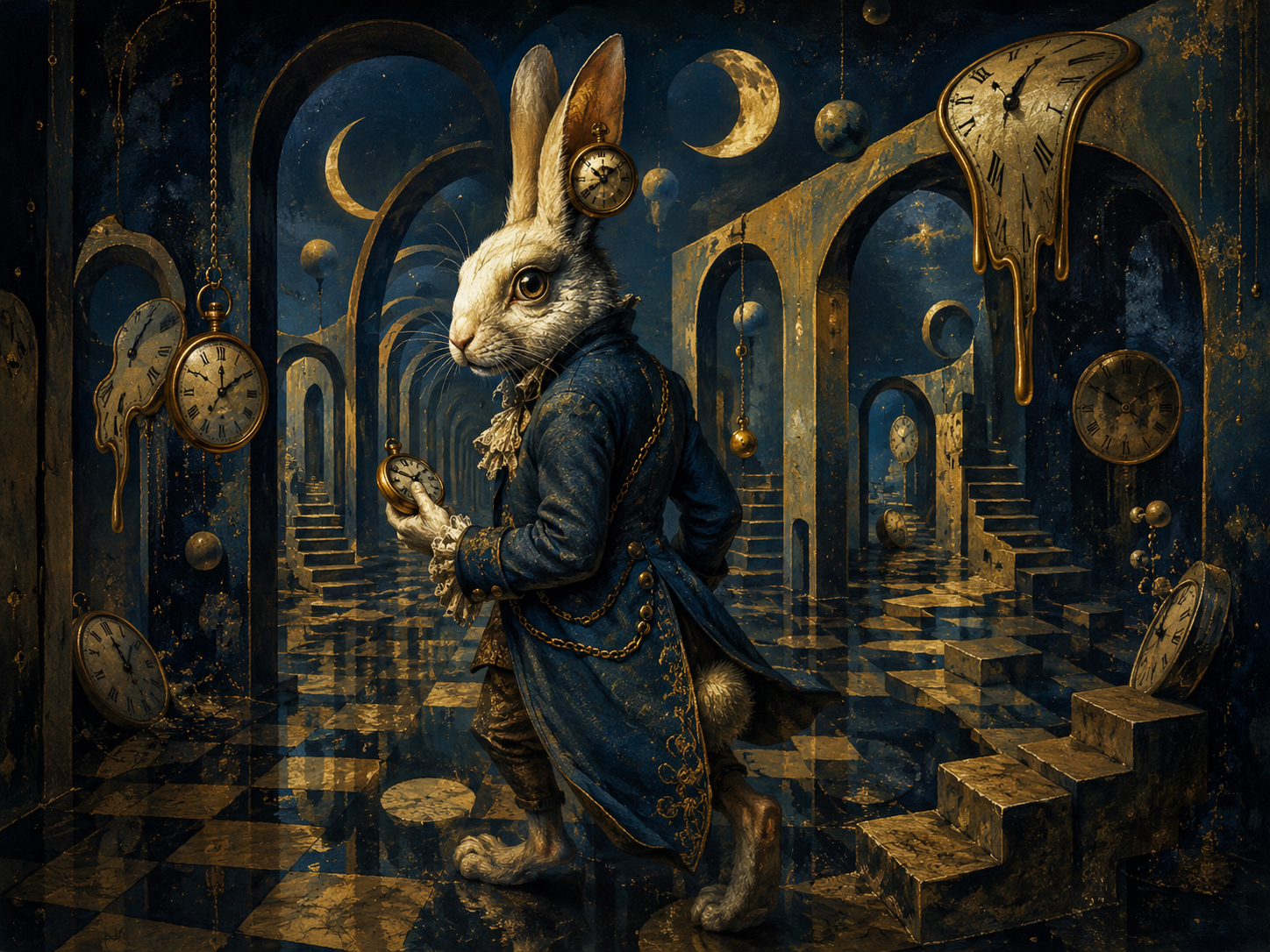
Surreal Clock Rabbit
Explains time badly, but somehow makes the painting better.
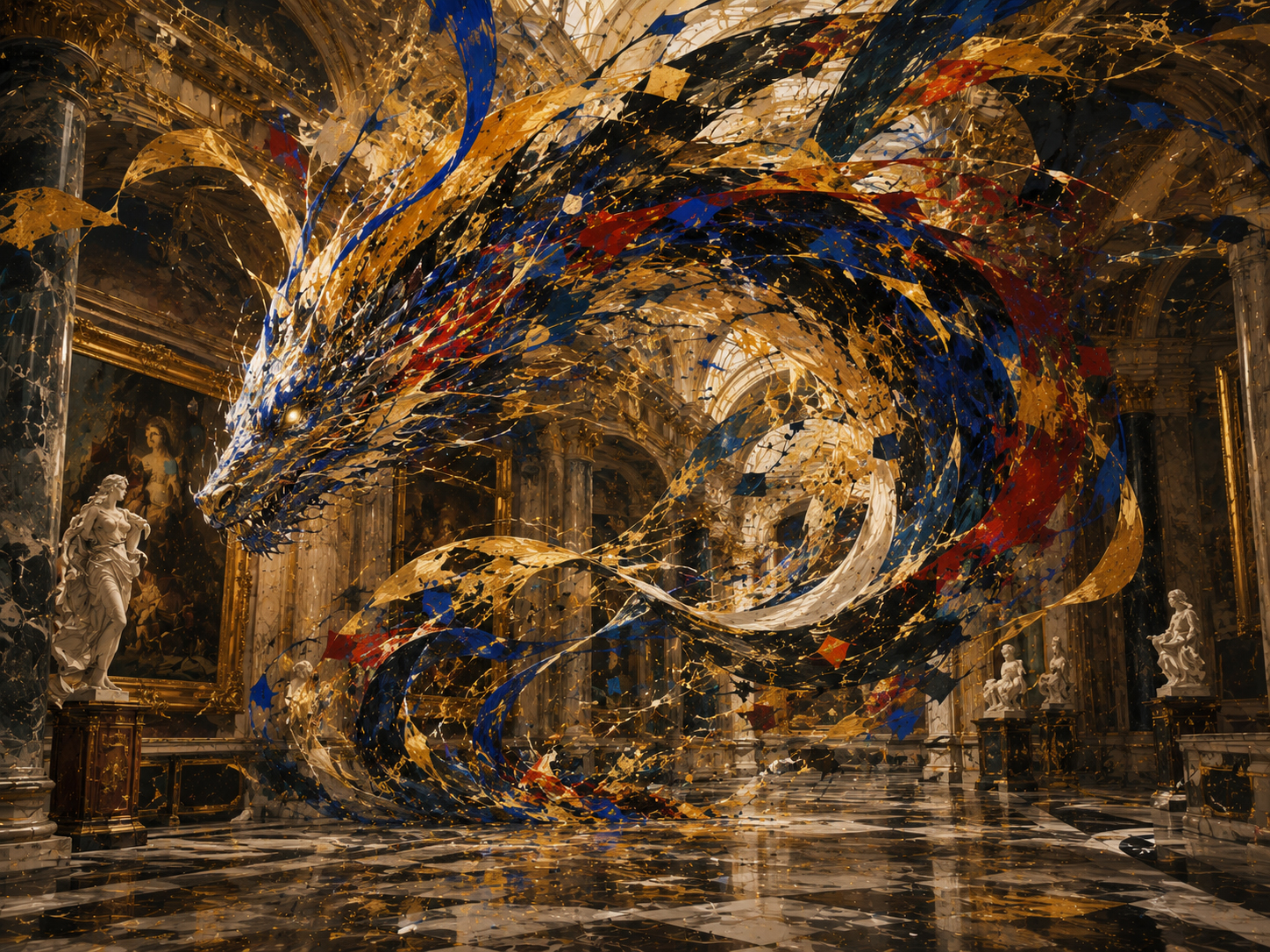
Abstract Dragon
Does not represent a dragon. Is dragon. Please update the wall label.
Quick test: is it Modern Art?
Ask these questions:
- Does it challenge realistic representation?
- Does it make color, shape, material, or idea more important than imitation?
- Does the artwork feel aware of modern life, speed, machines, psychology, mass culture, or disruption?
- Does it break a visual rule on purpose?
- Does it ask the viewer to participate instead of simply admire?
If yes, the painting may have left the old museum map and entered Modern Art territory.
Next museum rooms
After Modern Art breaks the frame, follow the pieces into abstraction, color theory, surrealism, and the full movement timeline.