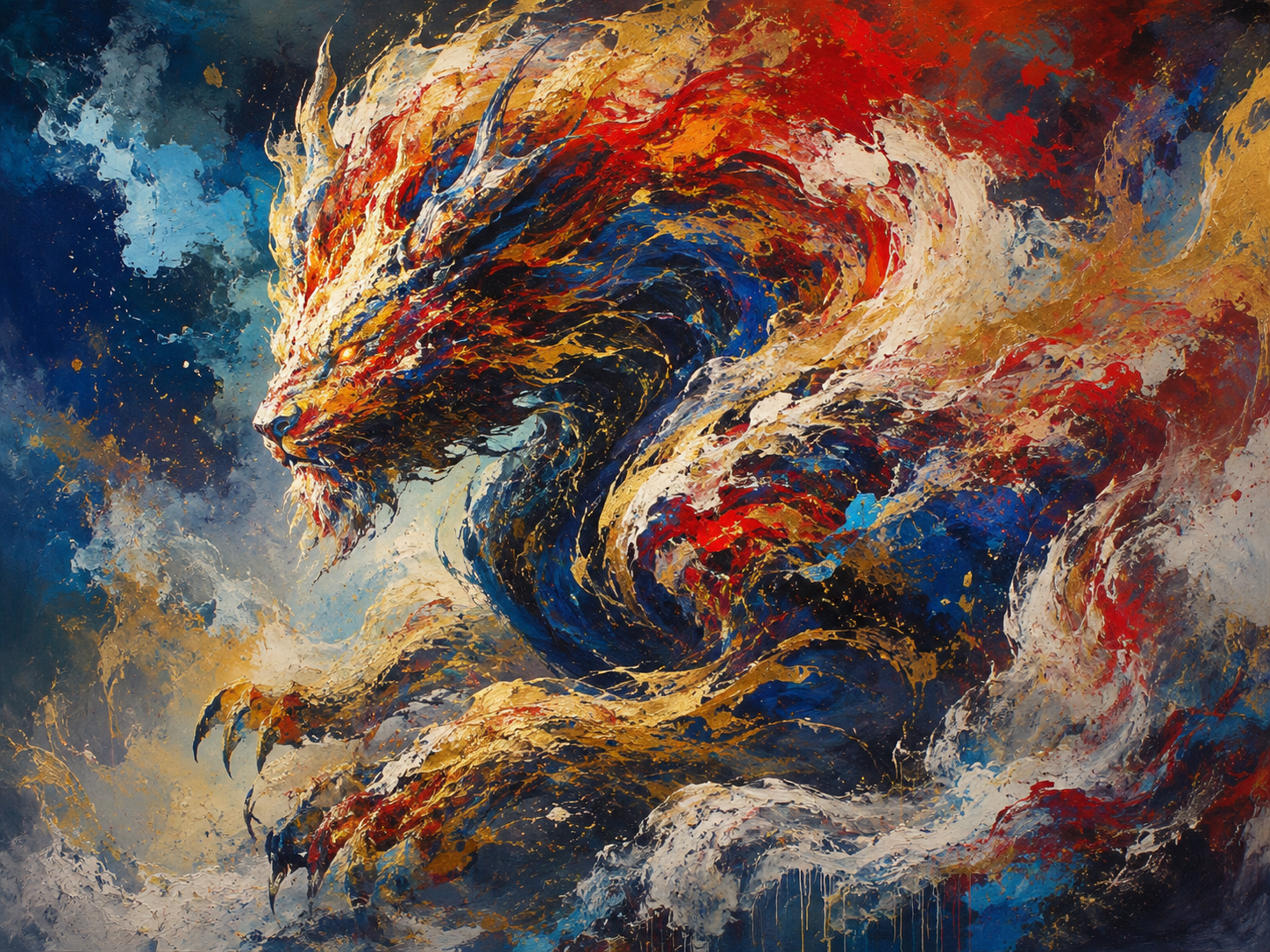
FineArtDaily Field Guide
What abstract art is
Abstract art is art that does not depend on recognizable people, places, or objects. Instead of saying, “Here is a bowl of fruit,” it may say, “Here is tension, joy, speed, balance, grief, music, or pure visual electricity.”
The easiest mistake is asking only, “What is it supposed to be?” A better question is: what is it doing?
How to look at abstract art
Start with the surface. Do not panic. Look for the big moves first: the dominant color, the largest shape, the direction of the lines, and whether the composition feels calm, explosive, heavy, floating, crowded, or empty.
- Color: warm or cool, loud or quiet, harmonious or clashing.
- Shape: geometric, organic, sharp, soft, stable, or unstable.
- Line: slow, fast, nervous, elegant, violent, or playful.
- Space: flat, deep, compressed, open, or maze-like.
- Rhythm: repeated marks that act almost like music.
Why artists moved toward abstraction
By the late 19th and early 20th centuries, artists were already breaking realism apart. Photography had changed the job of representation. Impressionists chased light. Post-Impressionists pushed color and structure. Cubists shattered viewpoint. Abstract artists took the next step: they let color, line, and form stand on their own.
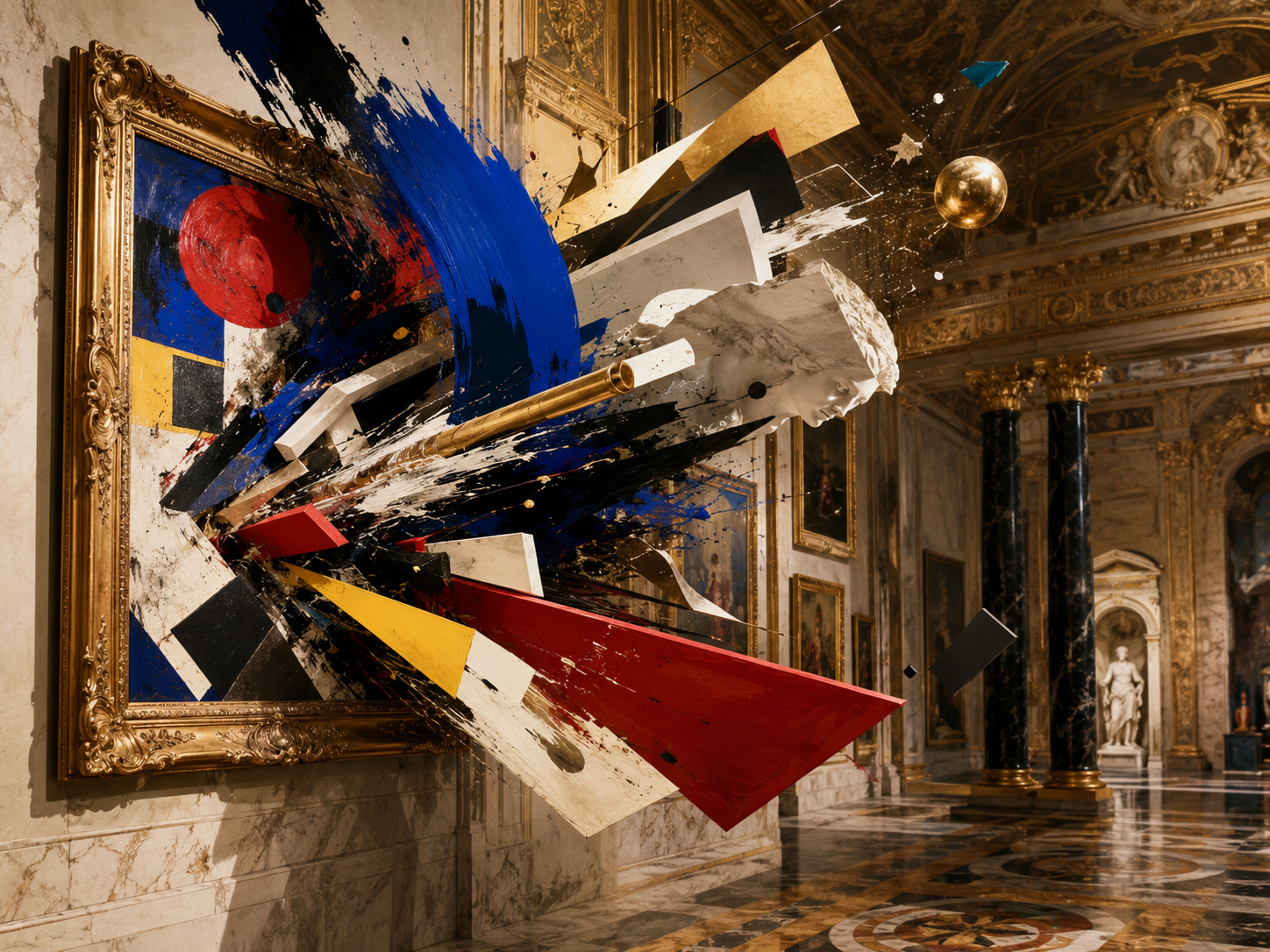
The frame breaks
Modern art questions whether art must imitate the visible world.
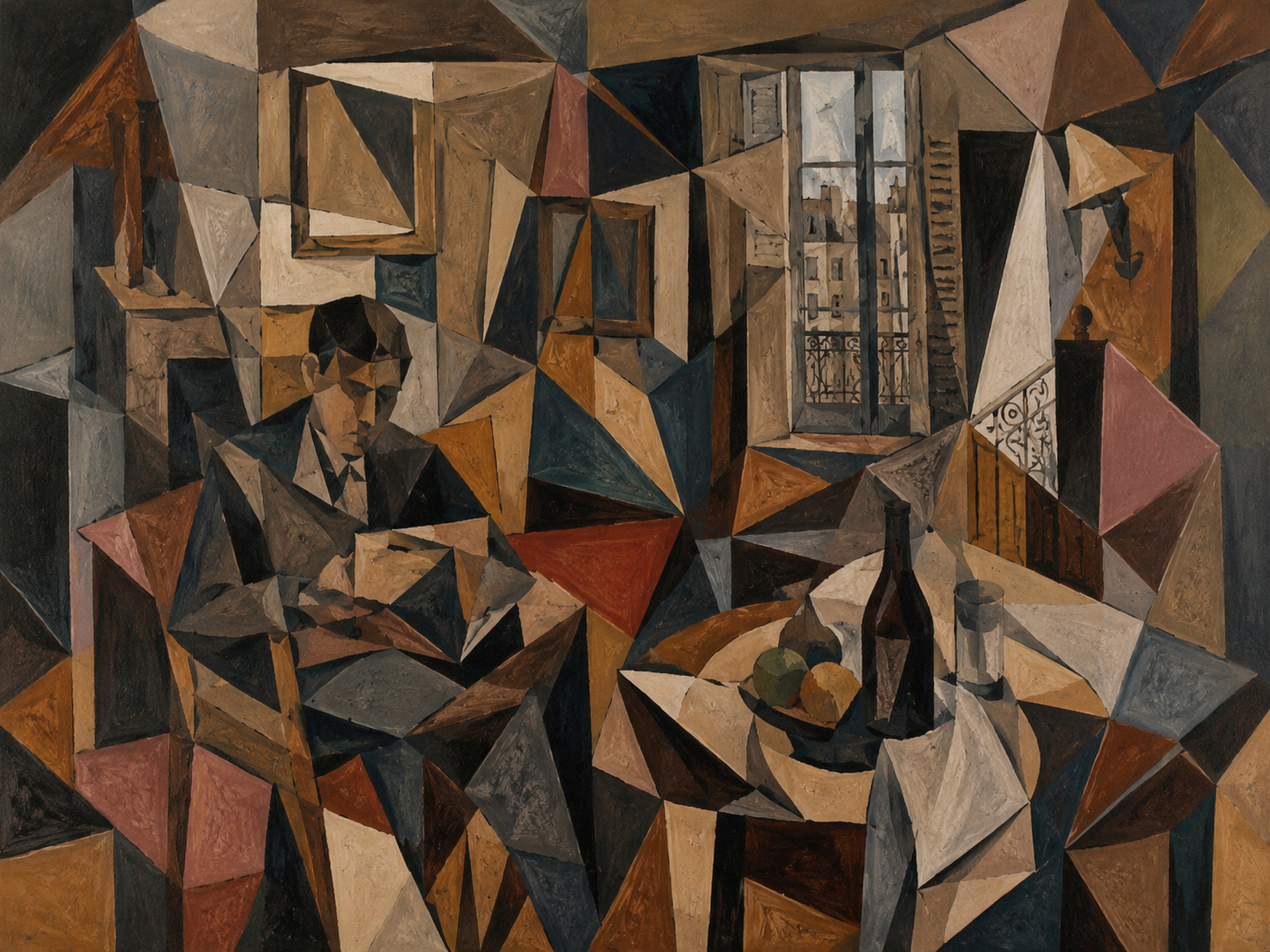
Viewpoint fractures
Cubism helps open the door to abstraction by showing several angles at once.
It is not just random
Some abstract art looks spontaneous, but strong abstraction usually has structure. The artist is making decisions about balance, edge, scale, repetition, contrast, and movement. Even a wild painting can have architecture underneath it.
Think of jazz. A solo may sound free, but it often depends on discipline, timing, listening, and control. Abstract painting can work the same way.
FineArtDaily characters in the abstract room
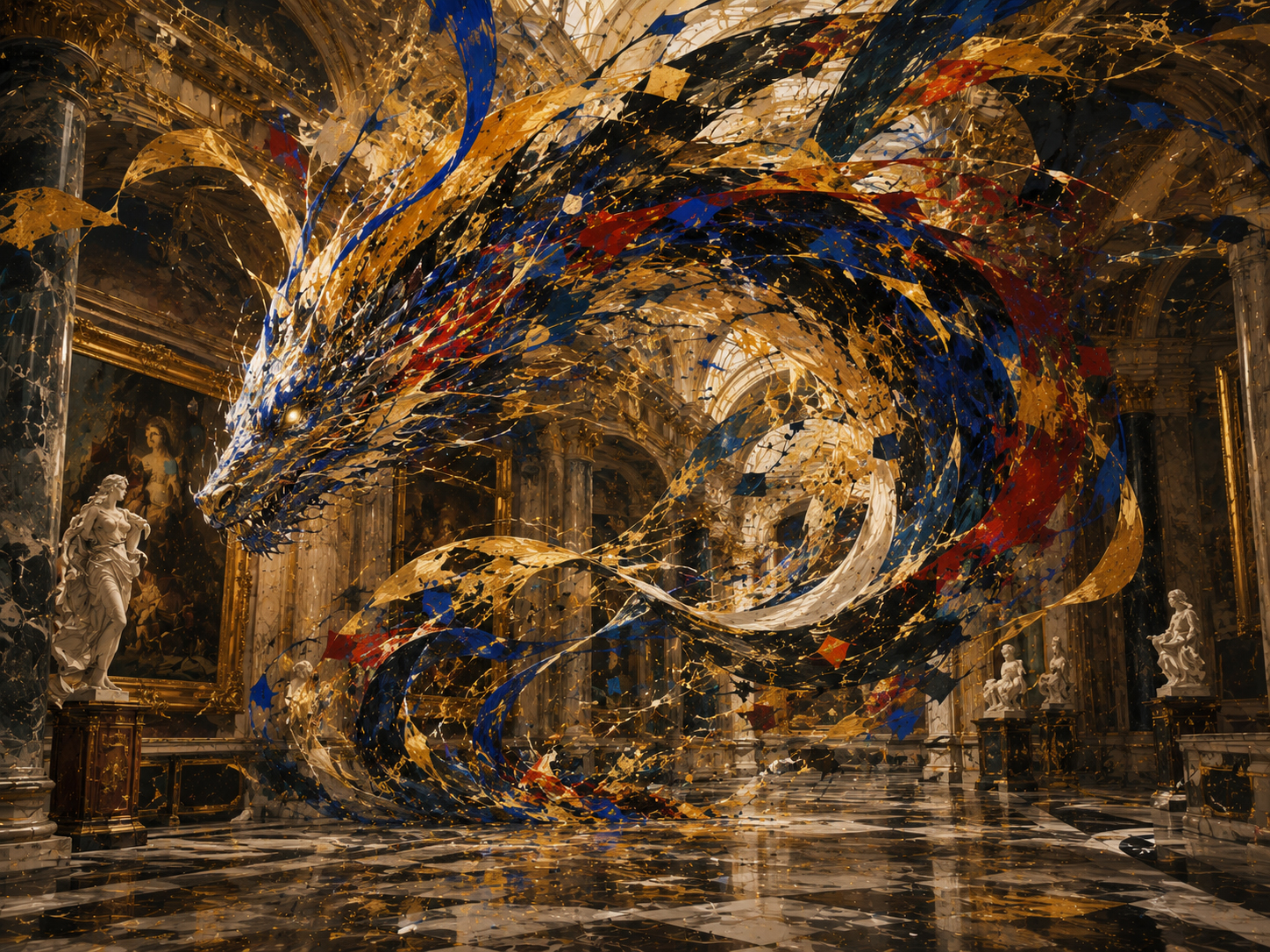
Abstract Dragon
Arrives when realism gives up and color starts breathing fire.
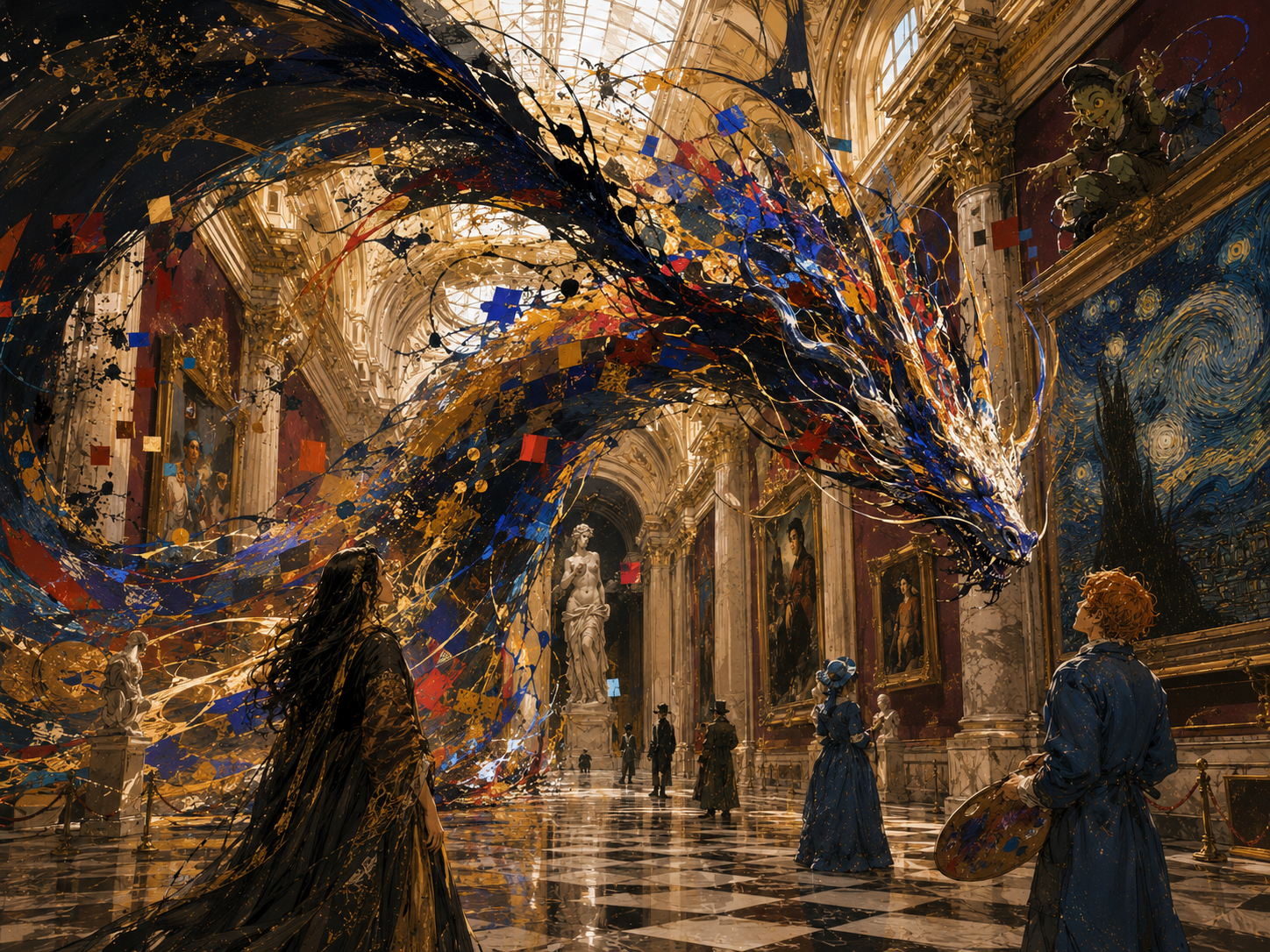
Gallery invasion
The museum room becomes an event, not just a container.
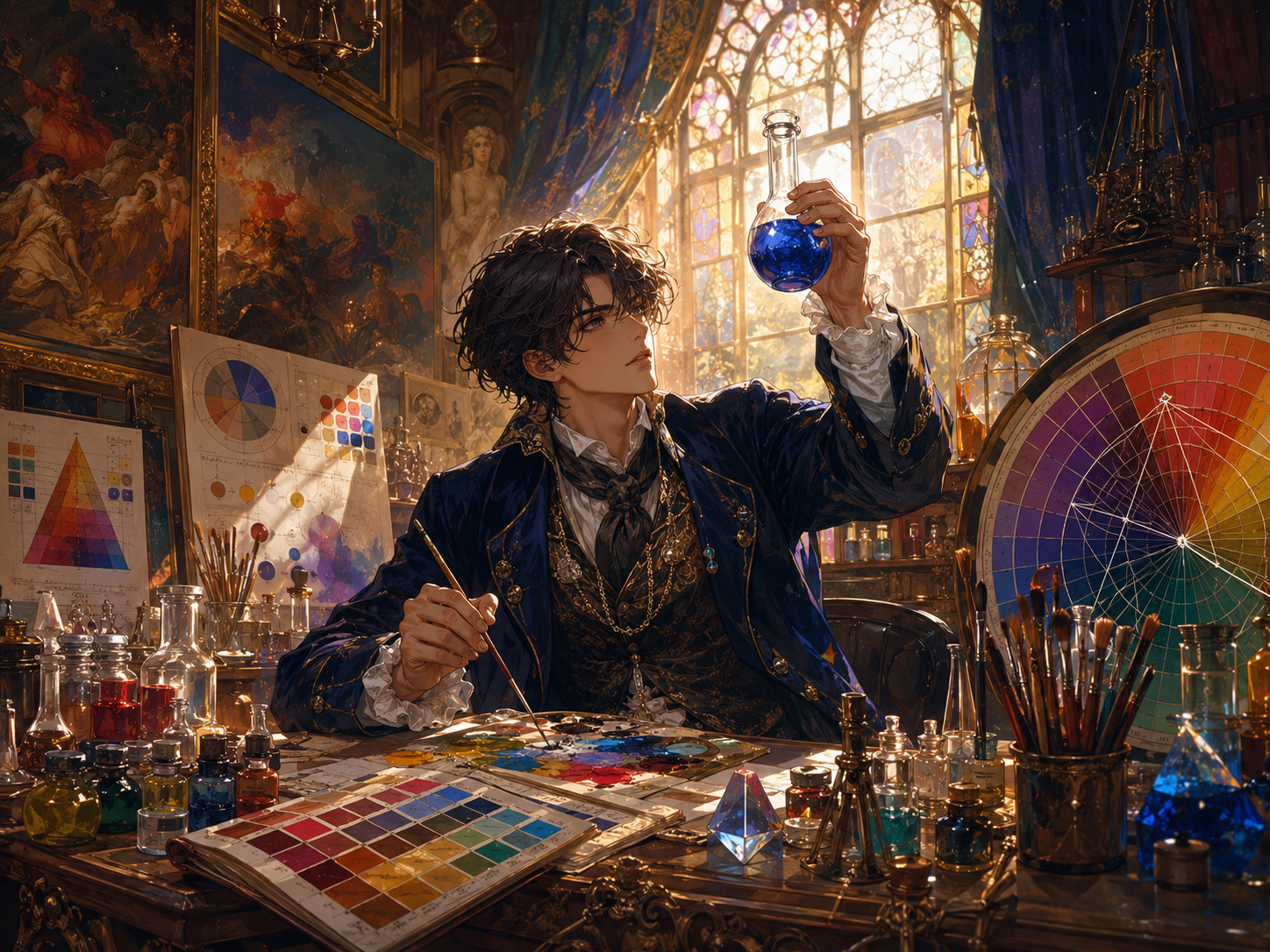
Palette laboratory
Color becomes the subject, the weather, and the argument.
Five questions to ask
- Where does your eye go first?
- What color controls the room?
- Does the painting feel balanced or unstable?
- What kind of motion does it suggest?
- What changes after you look for thirty more seconds?
Next rooms
After abstract art, visit color theory, modern art, Cubism, Surrealism, and the manga episodes where the Abstract Dragon makes everyone stop pretending they understood the wall label.