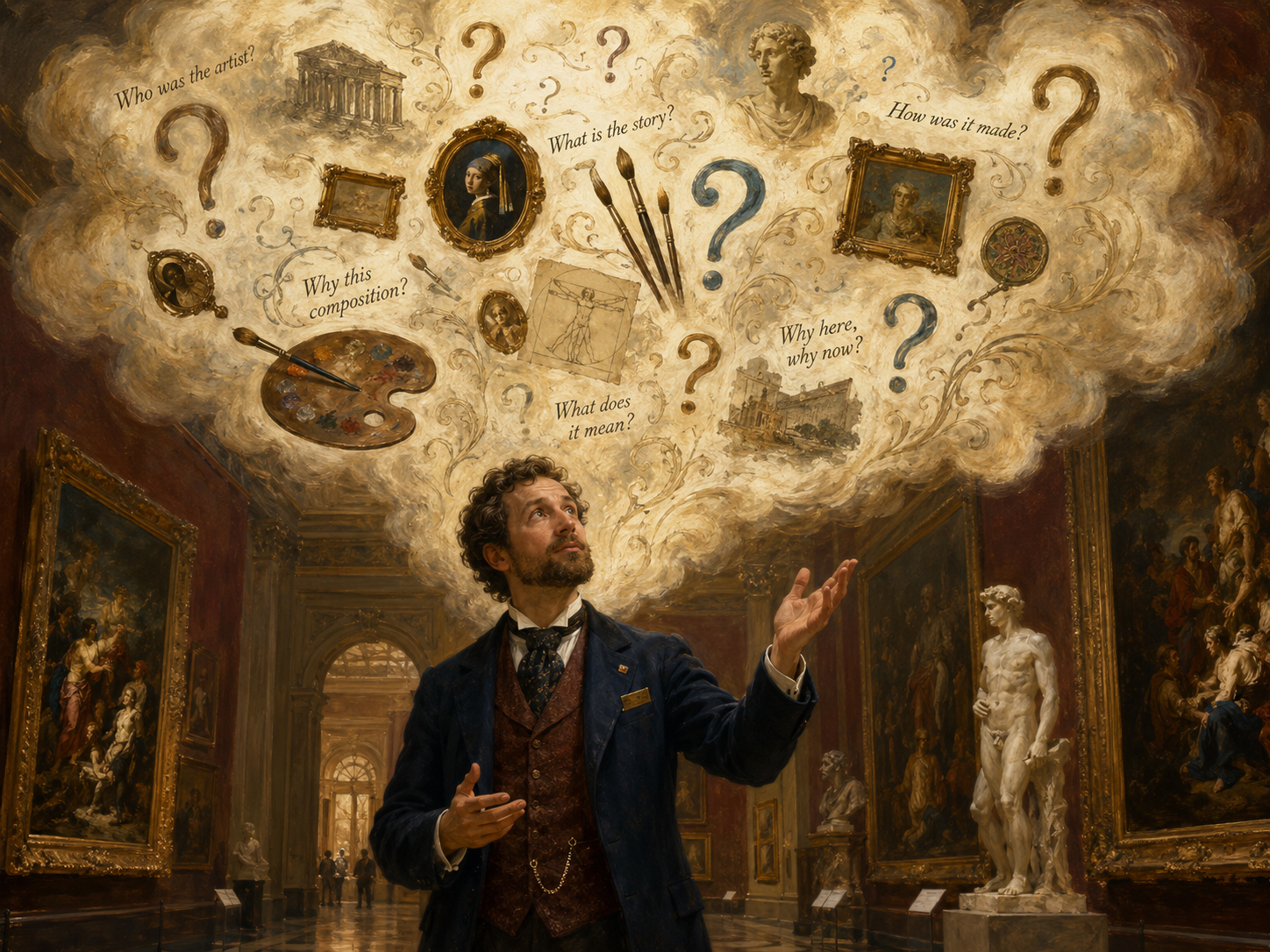
FineArtDaily FAQ
The basics
FineArtDaily is built for readers who like art history but do not want it wrapped in marble fog. The site uses original manga-style visuals, clear explanations, famous public-domain art subjects, and museum-world comedy to make looking at art easier and more fun.
What is FineArtDaily?
FineArtDaily is a manga museum newspaper about famous paintings, art movements, color, symbols, restoration secrets, museum behavior, and public-domain art history. The voice is smart, visual, funny, and practical.
Is this a serious art-history site or a comedy site?
Both. The facts should be serious; the delivery does not have to be stiff. Mona Lisa Sensei, Curator Cat, Palette Goblin, Professor Perspective, and Abstract Dragon are teaching devices, not replacements for history.
Who is this site for?
Curious adults, students, museum visitors, teachers, artists, parents, and anyone who has stood in front of a painting thinking, “Am I supposed to understand this?” The answer is: start by looking.
Looking at art
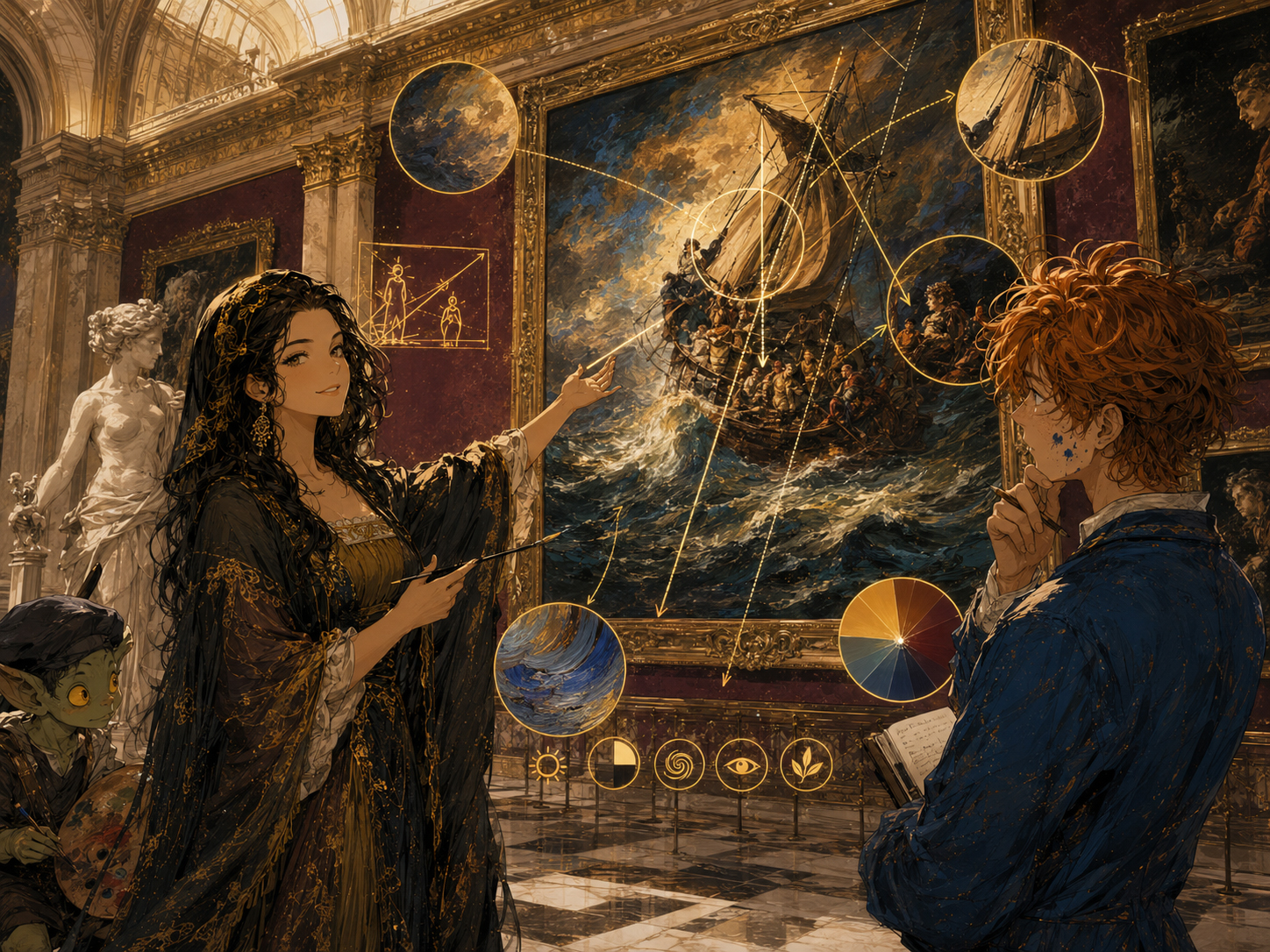
Look before you explain
The first job is not to decode the painting. It is to notice what is already in front of you.
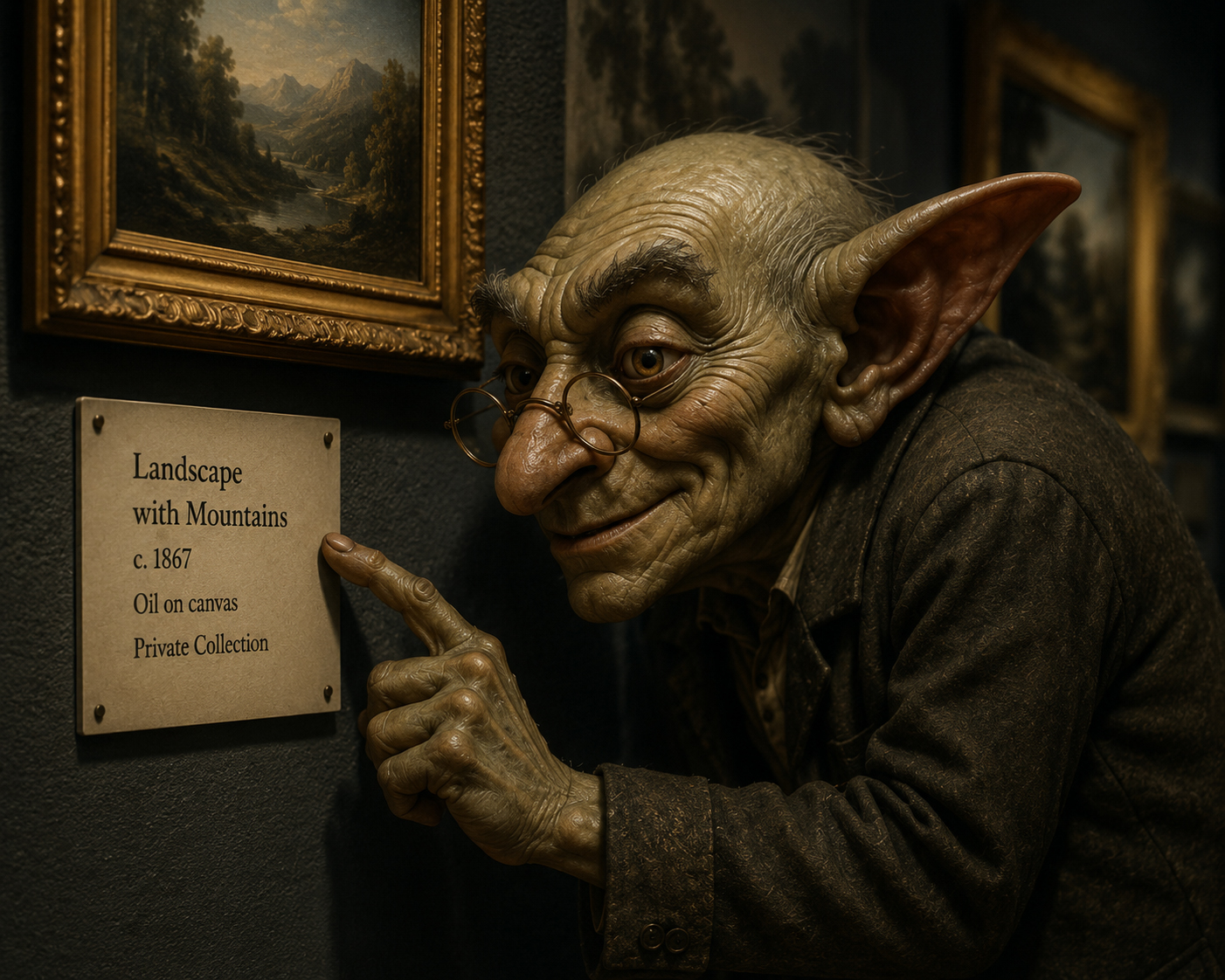
Labels help; eyes lead
Read labels after your first look. The second look is usually where the painting gets interesting.
How do I look at a painting if I know nothing about art?
Start with five questions: What do I notice first? Where does my eye go next? What is the strongest color? What is the mood? What detail changes the story? Then read the label and look again.
Do I need to know artist biographies?
No. Biography can help, but it is not the front door. Composition, color, light, gesture, scale, and mood are already visible. Let the artwork speak before the timeline enters the room.
Why do museums feel intimidating?
Museums sometimes inherit a hush-and-marble atmosphere. FineArtDaily treats the museum as a place for attention, not anxiety. You are allowed to be curious before you are knowledgeable.
Public domain and images
FineArtDaily’s safest image strategy is original illustration inspired by public-domain art history and open-access museum resources. Many famous artworks are public-domain as works of art, but specific museum photographs, scans, or exhibition images can still carry usage terms. Always check the source before using a direct reproduction.
Important image policy
FineArtDaily images should be original manga/editorial illustrations or properly sourced open-access/public-domain materials. The site should not casually copy protected modern artworks, contemporary museum photos, or copyrighted reproductions.
Are famous paintings public domain?
Many older artworks are in the public domain because the artists died long ago. But that does not automatically mean every online image file is free to use without checking terms. The artwork and the photograph/scan can be different rights questions.
Can FineArtDaily use museum images?
Yes, when the museum’s terms allow it. Good open-access sources include institutions that clearly mark images as public domain, CC0, or otherwise reusable. The Sources page should keep those references clean and visible.
Why use original manga-style illustrations?
They give the site its own identity, reduce reproduction-rights risk, and let the articles explain art history with characters, jokes, visual metaphors, and story scenes instead of relying only on direct copies of artworks.
Characters
The character cast gives each concept a memory hook. They are deliberately playful, but each one points back to a real art skill: looking, color, perspective, movement, interpretation, and museum context.
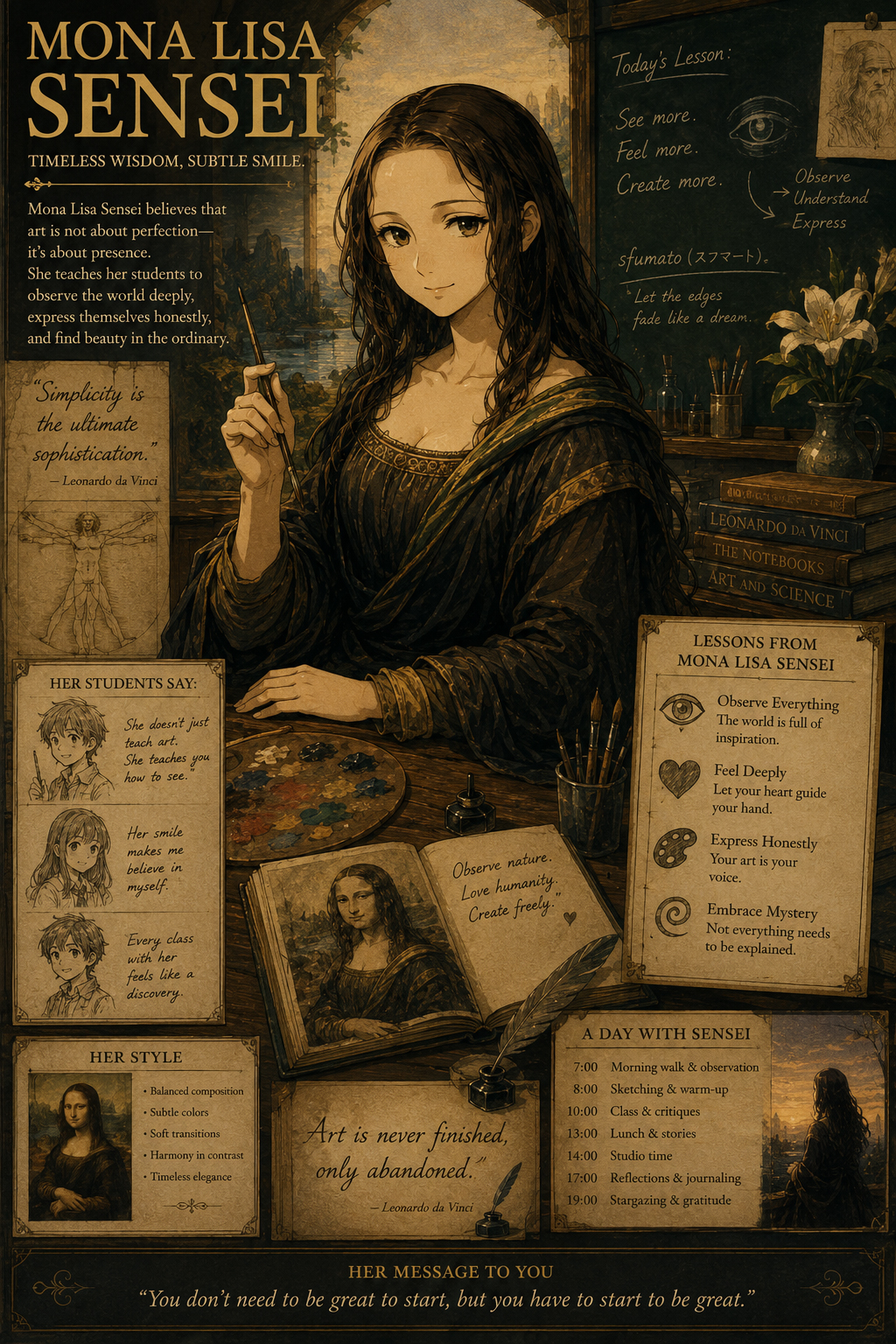
Mona Lisa Sensei
Mystery, ambiguity, slow looking, and the refusal to explain everything.
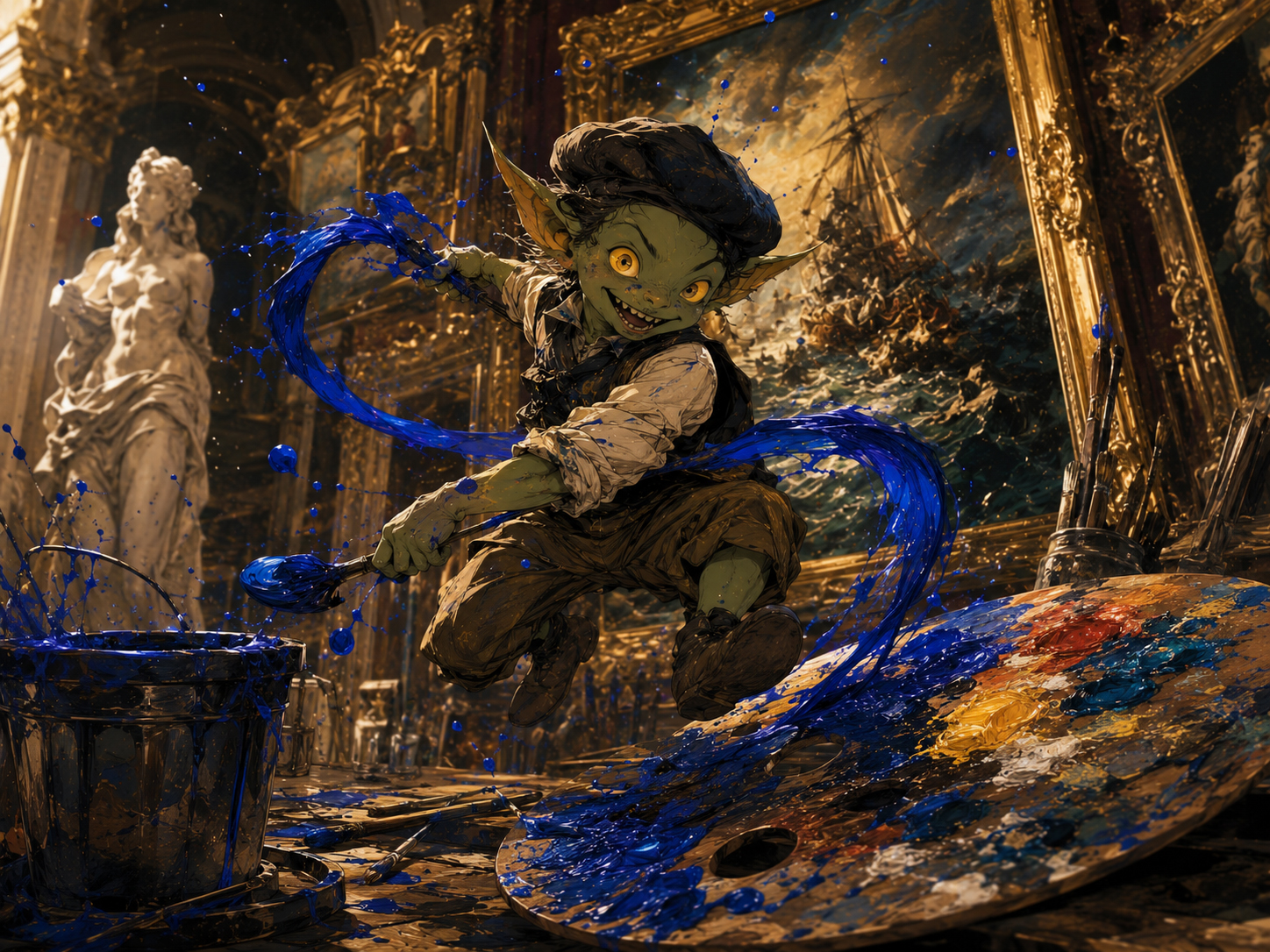
Palette Goblin
Hue, value, saturation, stolen blue, and color chaos.

Professor Perspective
Vanishing points, horizon lines, rooms, depth, and visual order.
Are the characters based on real people?
They are fictional educational characters inspired by art-history ideas. Mona Lisa Sensei references the famous painting as a public-domain cultural subject, while characters like Curator Cat and Palette Goblin are original teaching mascots.
Why manga?
Manga energy makes art history less frozen. Expressions, panels, visual jokes, and recurring characters help explain ideas that can otherwise feel abstract, academic, or locked behind museum glass.
Art movements
FineArtDaily treats art movements as rooms in a giant museum, not as vocabulary tests. Renaissance asks for order. Baroque brings drama. Rococo floats in decorative clouds. Romanticism storms the mountain. Impressionism chases light. Modern art breaks the frame.
What movement should I start with?
Start with Renaissance if you want structure, Impressionism if you like light and everyday life, or Modern Art if you want to understand why artists stopped pretending the canvas was a window.
Is abstract art supposed to mean something?
Sometimes. But it often works through color, rhythm, scale, texture, and mood rather than a clear story. Ask what the work is doing visually before demanding a chair, apple, or horse.
Museums and manners
What is the biggest museum etiquette rule?
Do not touch the art. After that: give people space, follow posted photo rules, keep food and drink away, wear backpacks carefully, and be kind to guards and staff.
Should I read every label?
No. Read labels strategically. First look at the artwork, then read the label, then look again. If you try to read every label in a large museum, your brain may file a formal complaint.
Using the site
Where should I go next?
Use How to Look at Art for the practical method, Famous Paintings for iconic works, Art Movements for the timeline, Manga Episodes for story pages, and Sources for open-access/public-domain research foundations.
Does FineArtDaily sell art or provide appraisals?
No. FineArtDaily is an educational/editorial site. It does not authenticate art, appraise collections, sell artworks, or replace advice from qualified art historians, conservators, lawyers, museums, or appraisers.
Can teachers or parents use the site?
Yes. The pages are built for accessible art education. Teachers and parents should still verify sources for classroom use and adapt the material to age, context, and curriculum.
Best starting path
For a first visit, read these in order. Curator Cat approves the route and only lightly judges your shoes.