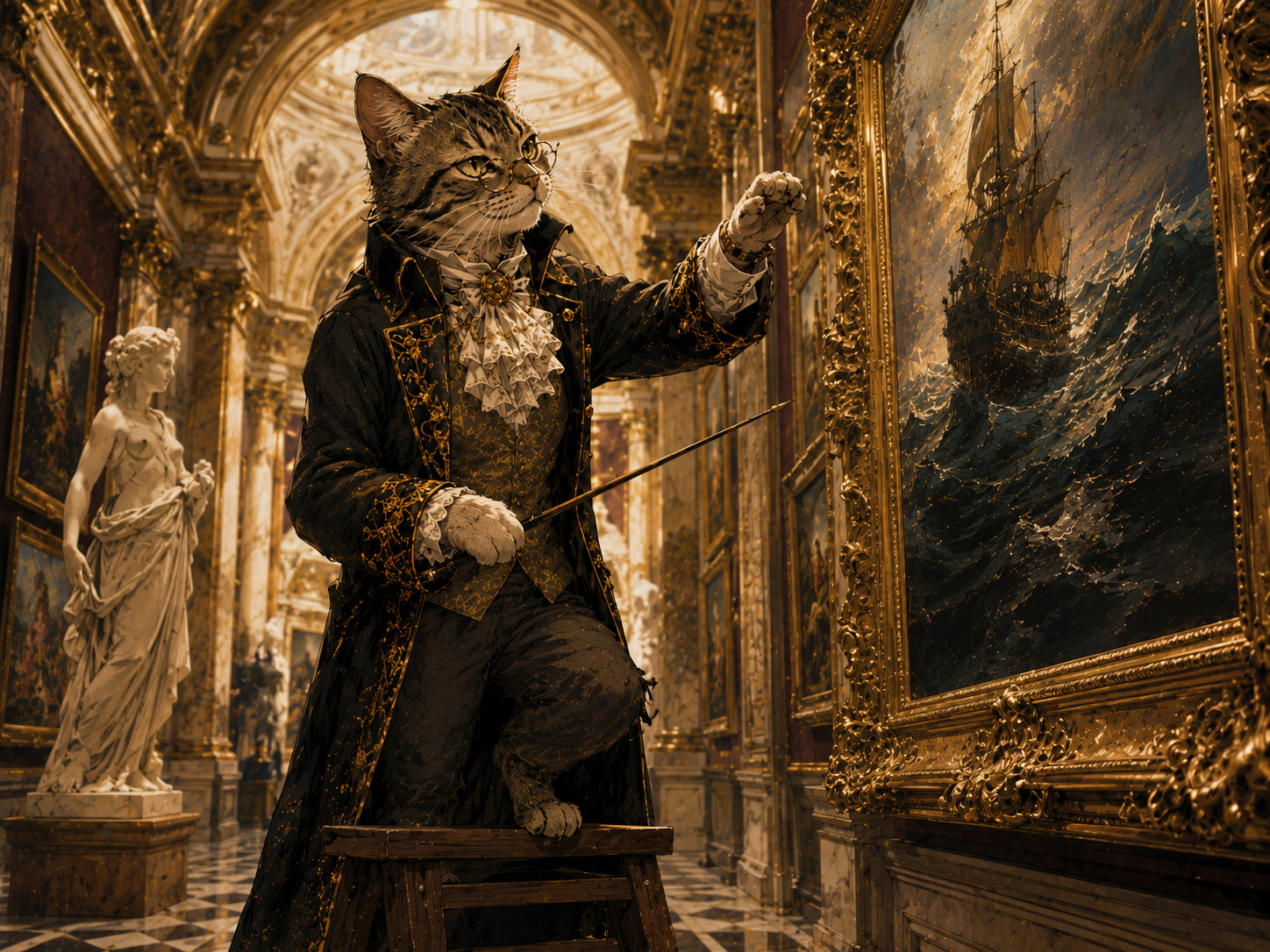
FineArtDaily cast
The cat who keeps the museum from becoming a circus.
Curator Cat appears whenever a visitor rushes through a gallery, photographs every label, ignores the painting, and says, “I saw it.” She disagrees. Seeing art is not a speed sport. It is a conversation between eye, object, room, history, and attention.
She is not stuffy. She is exact. She knows a painting can be ruined by bad lighting, a lazy label, a crooked frame, crowd noise, glare, or a visitor standing so close that no one else can see the brushwork. Her job is to protect the looking.
Profile card
Official title
Senior Keeper of Frames, Labels, Lighting, Quiet Drama, and Proper Distance from the Velvet Rope.
Signature move
The one-inch correction: a tiny frame adjustment that somehow makes the entire gallery sigh with relief.
Favorite question
“What is the room doing to help you see the painting?”
Natural enemy
Flash photography, gum, vague labels, fingerprints, backpack collisions, and people who touch frames “just a little.”
What Curator Cat teaches
Curator Cat teaches that museums are not neutral boxes. They shape attention. The height of a painting, the color of a wall, the order of rooms, the placement of benches, the length of a label, and the amount of light can change how a visitor understands a work.
She also teaches practical etiquette: step back before stepping in, look before reading the label, keep bags away from art, avoid flash, give other viewers room, and remember that silence is not required but awareness is.
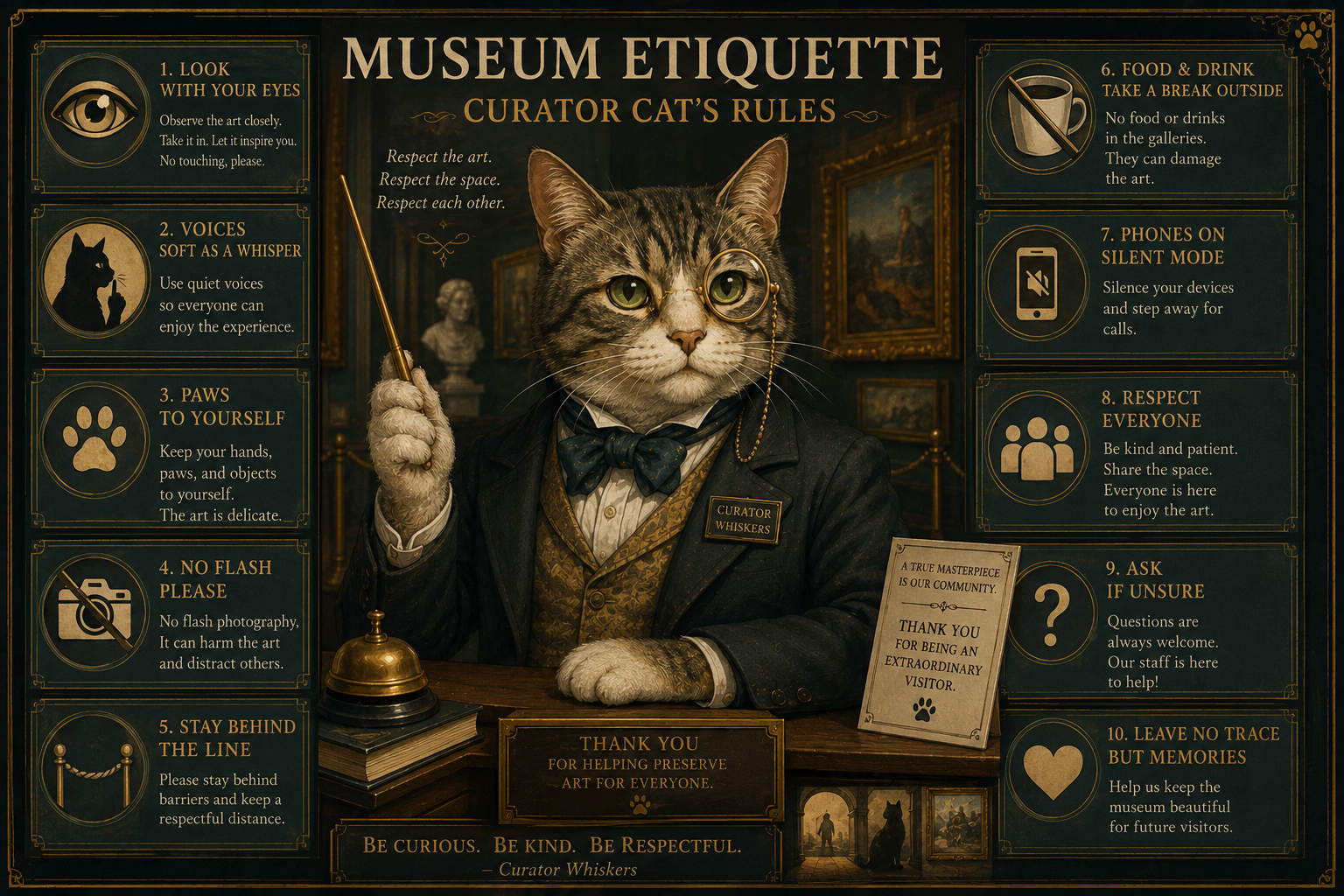
The rules
Museum etiquette is not about fear. It is about keeping art safe and giving everyone a fair chance to look.
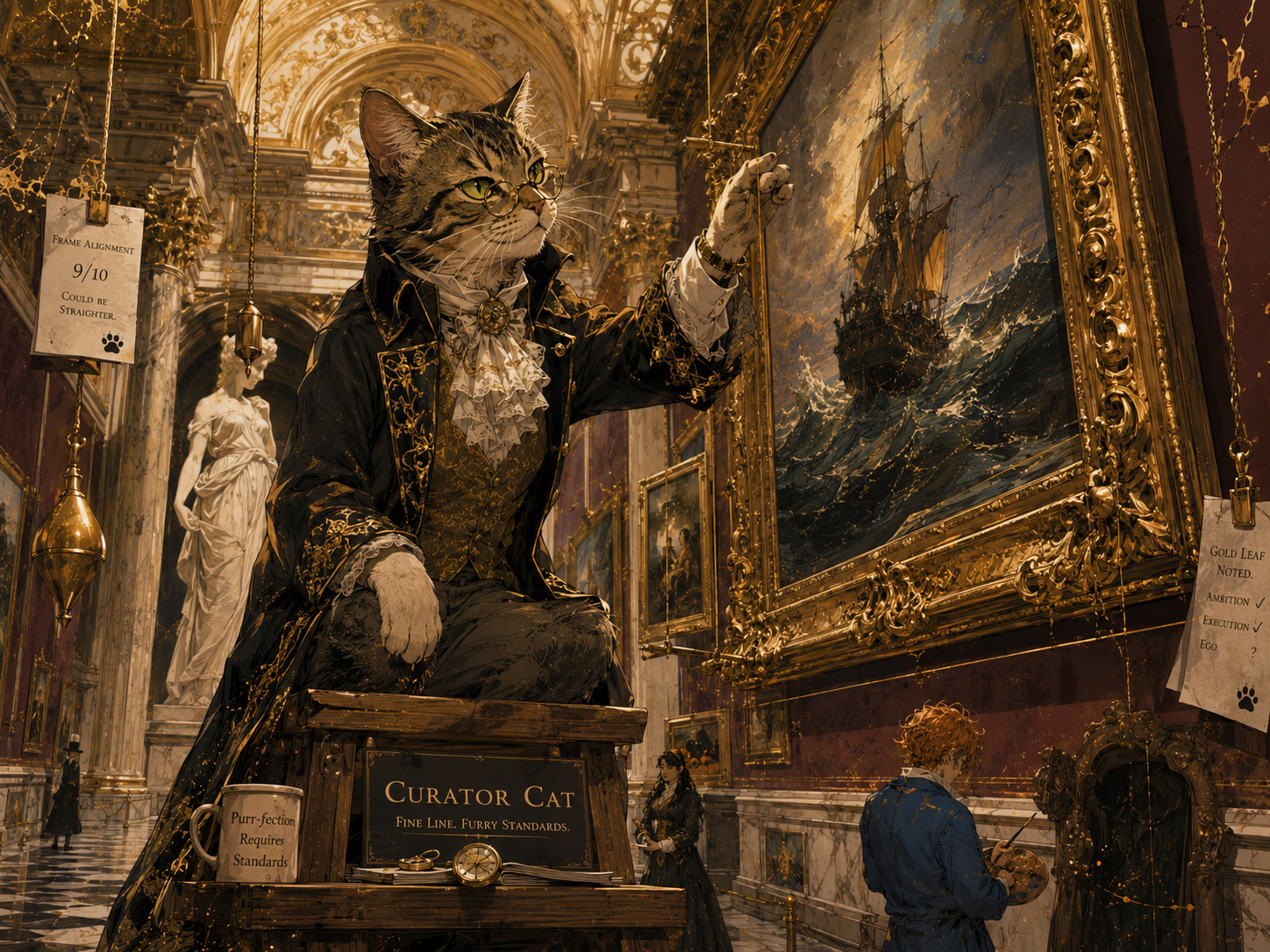
The frame verdict
A frame can support a painting, overwhelm it, historicize it, flatter it, or start a fight with the wall.
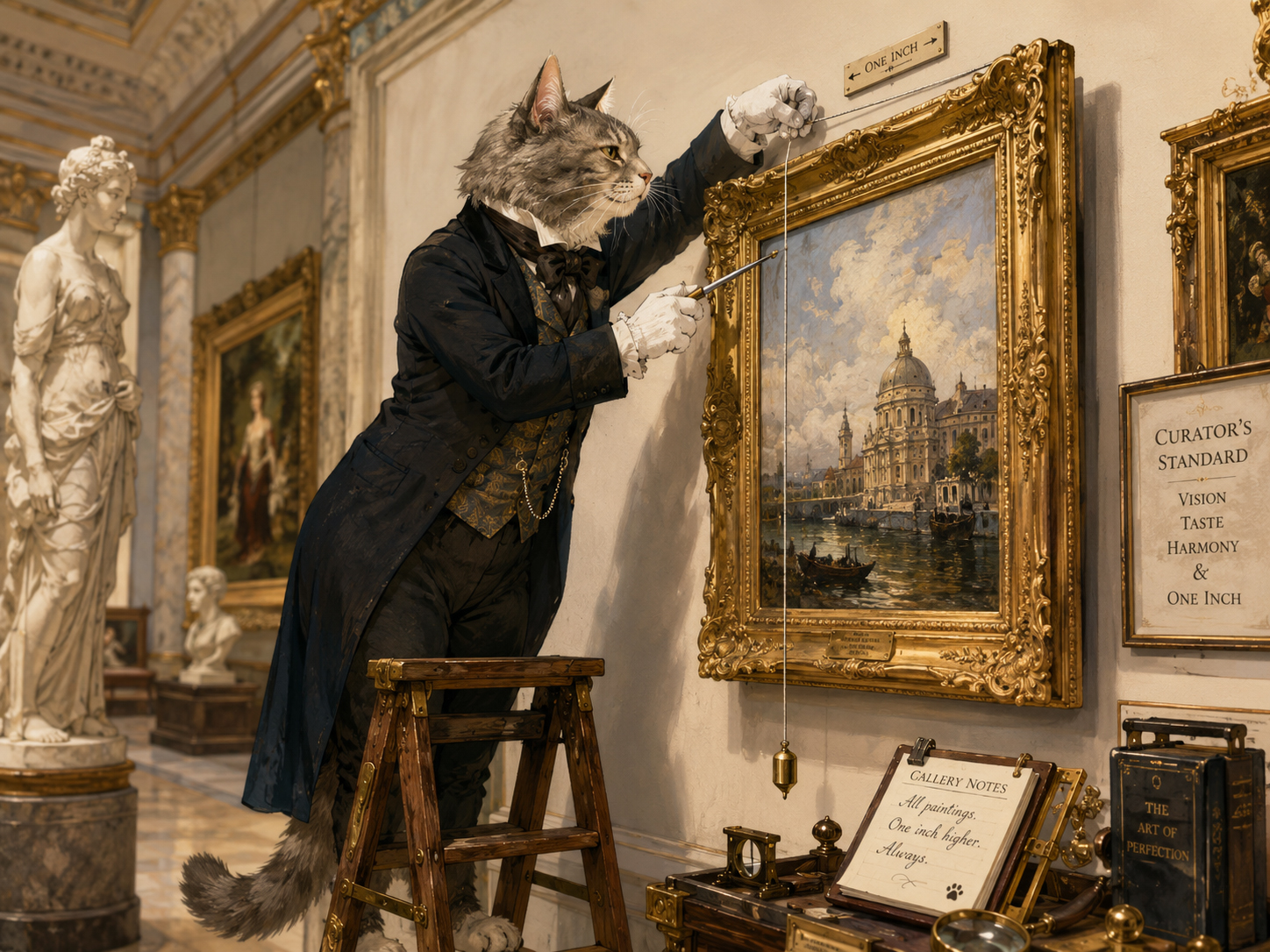
The one-inch crisis
Sometimes the difference between awkward and elegant is a ruler, a ladder, and a cat with standards.
Role in the FineArtDaily universe
Curator Cat is the site’s orderkeeper. Palette Goblin causes color disasters. Professor Perspective fixes crooked rooms. Abstract Dragon bursts through convention. Mona Lisa Sensei refuses to explain. Curator Cat keeps the whole museum from becoming a glittering pile of beautiful nonsense.
She is especially useful for pages about museum etiquette, famous paintings, gallery labels, frame shops, public-domain licensing, restoration, exhibition design, and the basic skill of slowing down before forming an opinion.
Episode appearances
Museum Etiquette
How to visit a museum without becoming the cautionary tale in Curator Cat’s staff meeting.
Episode 7: Curator Cat Hangs It One Inch Higher
A frame is moved. A gallery gasps. A painting finally gets the breathing room it deserves.
Curator Cat’s five rules
- Look first. Give the artwork a moment before the label explains it for you.
- Step back. Many paintings are designed to organize themselves from a few feet away.
- Protect the object. No touching, leaning, flash, food, or careless bags near art.
- Share the view. Museums are public rooms. Do not camp in front of the masterpiece forever.
- Trust questions. Confusion is not failure. It is often the start of looking properly.
A note from the label desk
FineArtDaily uses original manga-style illustrations inspired by public-domain art history. Curator Cat approves of open-access research, careful captions, and checking museum image policies before publishing direct reproductions. She does not approve of pretending every image on the internet is automatically free to reuse.
Next character
Professor Perspective has discovered that the room is leaning, the floor tiles are lying, and the horizon line has wandered into the gift shop.