
A museum fable about slowing down.
The visitor entered with confidence, a phone, and exactly eight minutes before lunch. That was the first mistake.
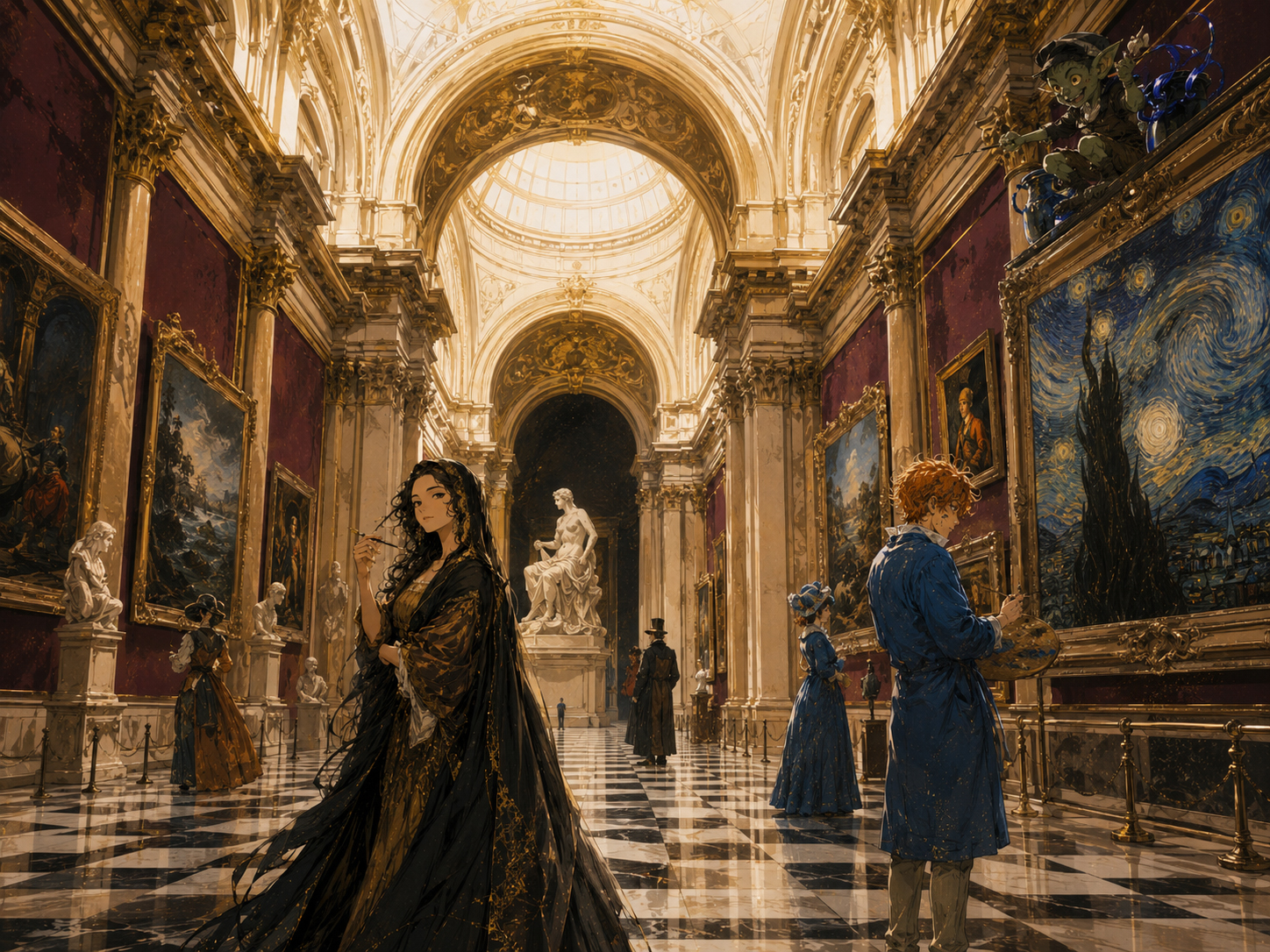
The Speed-Walk of Culture
Past the marble bust. Past the gold frame. Past the label that took a curator three weeks to write. The visitor nodded at every painting as if checking boxes on a grocery list.

The Frame Clears Its Throat
At the far end of the gallery, one portrait leaned slightly forward inside its frame. Not enough for security to notice. Enough for art history to begin misbehaving.
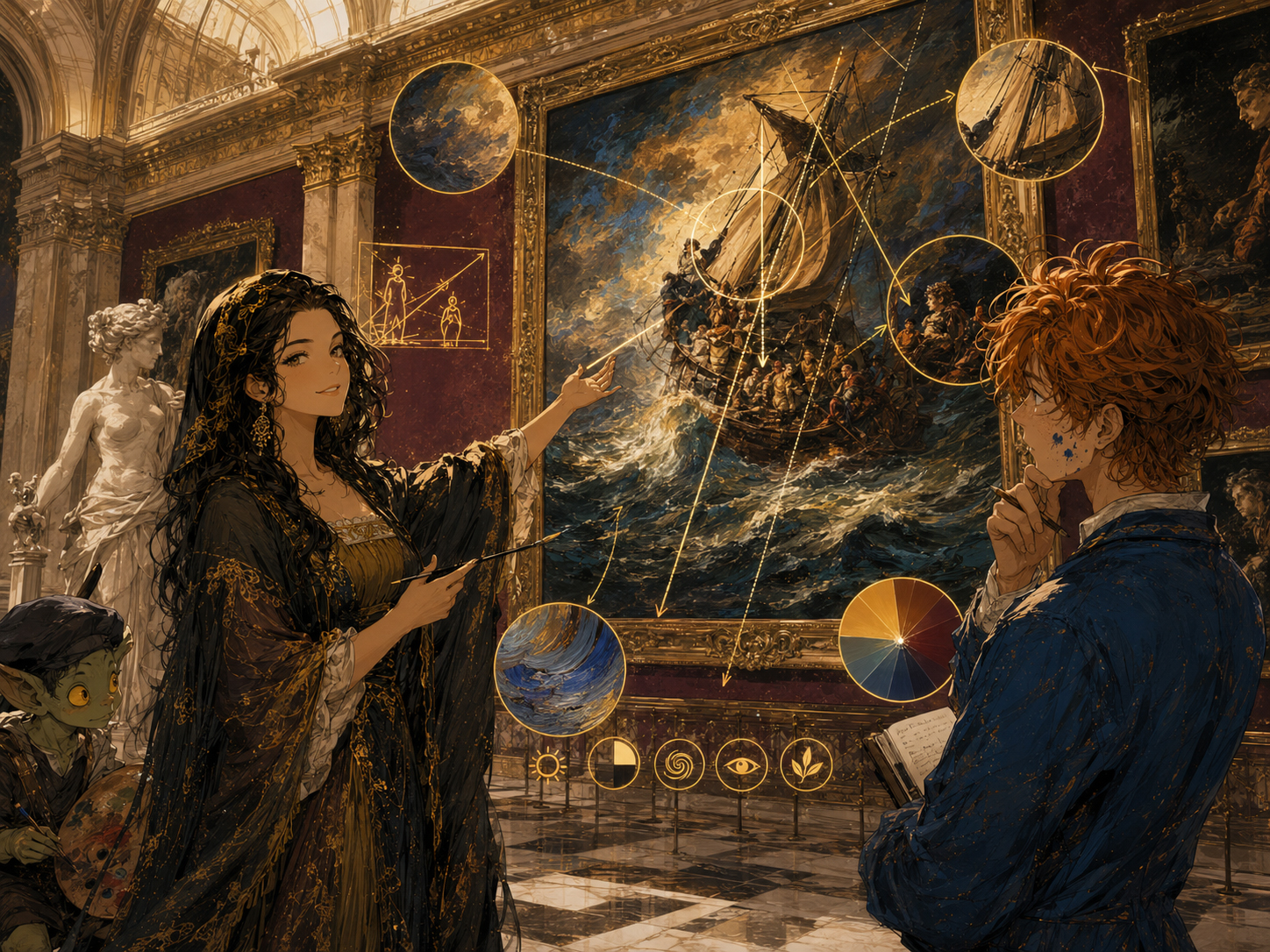
The Visitor Tries to Act Normal
The visitor looked left. Looked right. The museum guard did not move. Curator Cat stared from a bench with the expression of someone who had been expecting this all morning.
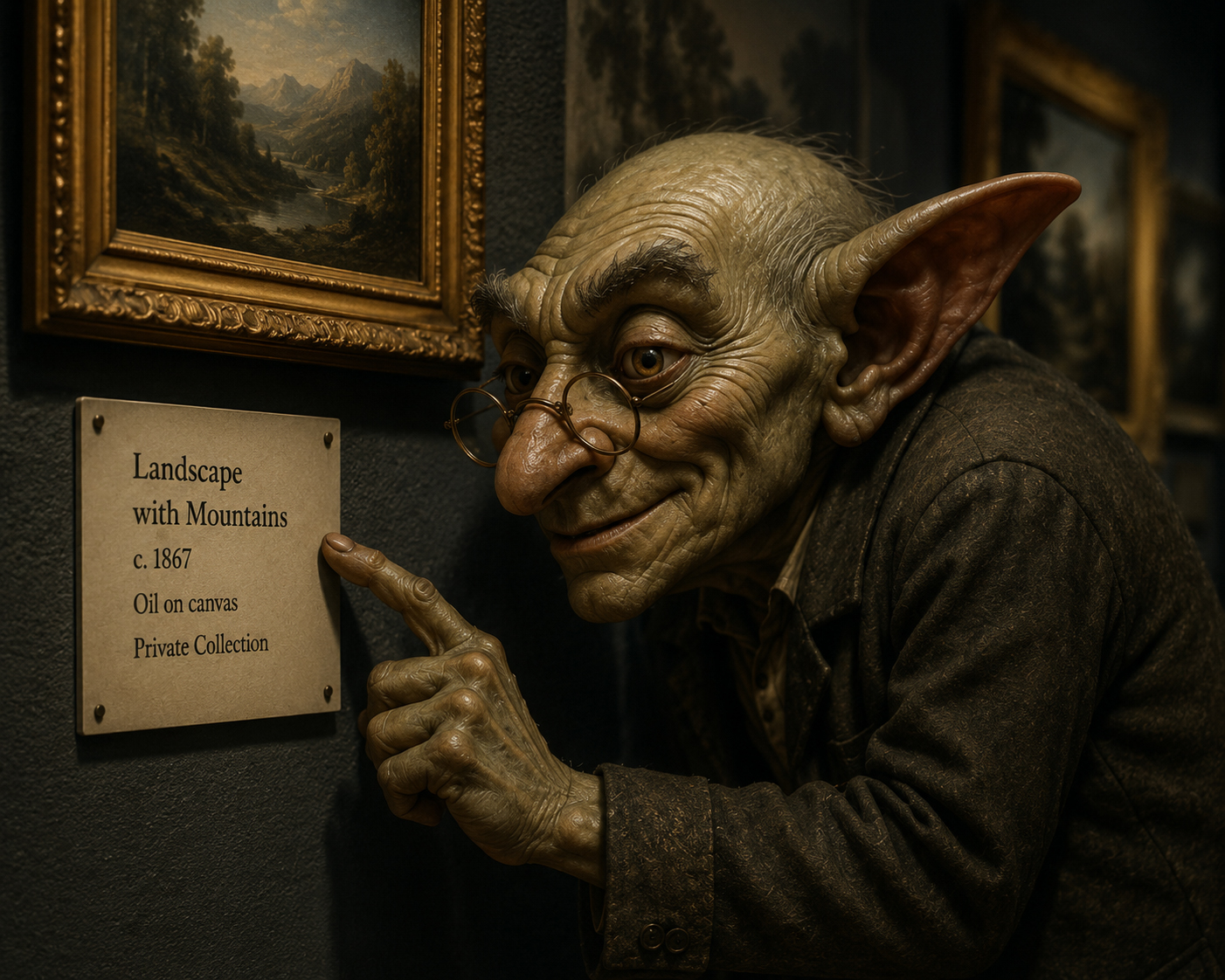
The Label Goblin Appears
A tiny goblin crawled out from behind the wall label carrying a magnifying glass, a pencil, and an attitude. He tapped the label three times.
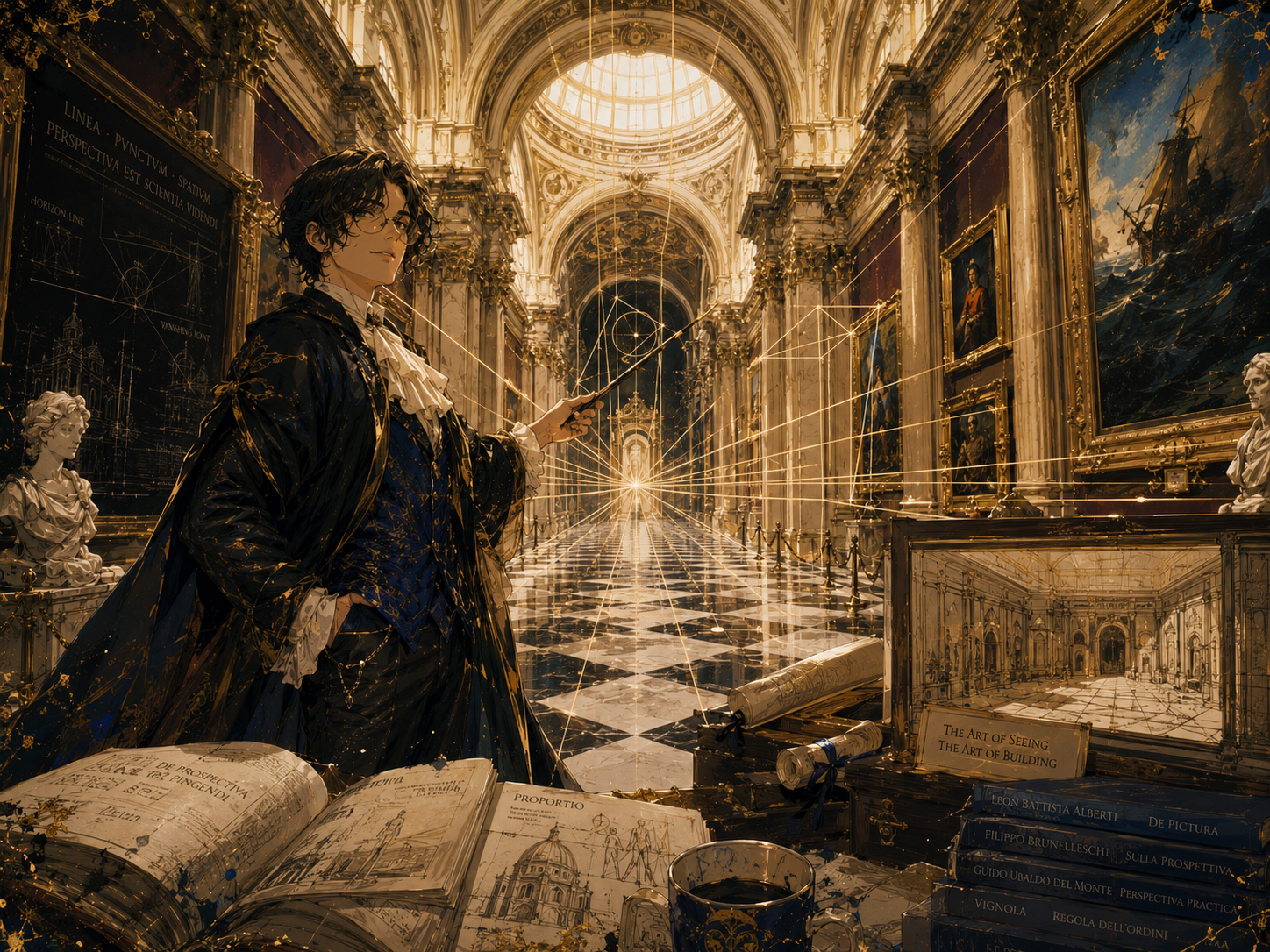
Professor Perspective Draws Lines in the Air
Golden lines stretched from the frame to a point deep inside the painted room. A table, a window, a hand, and a distant doorway suddenly stopped being random details.
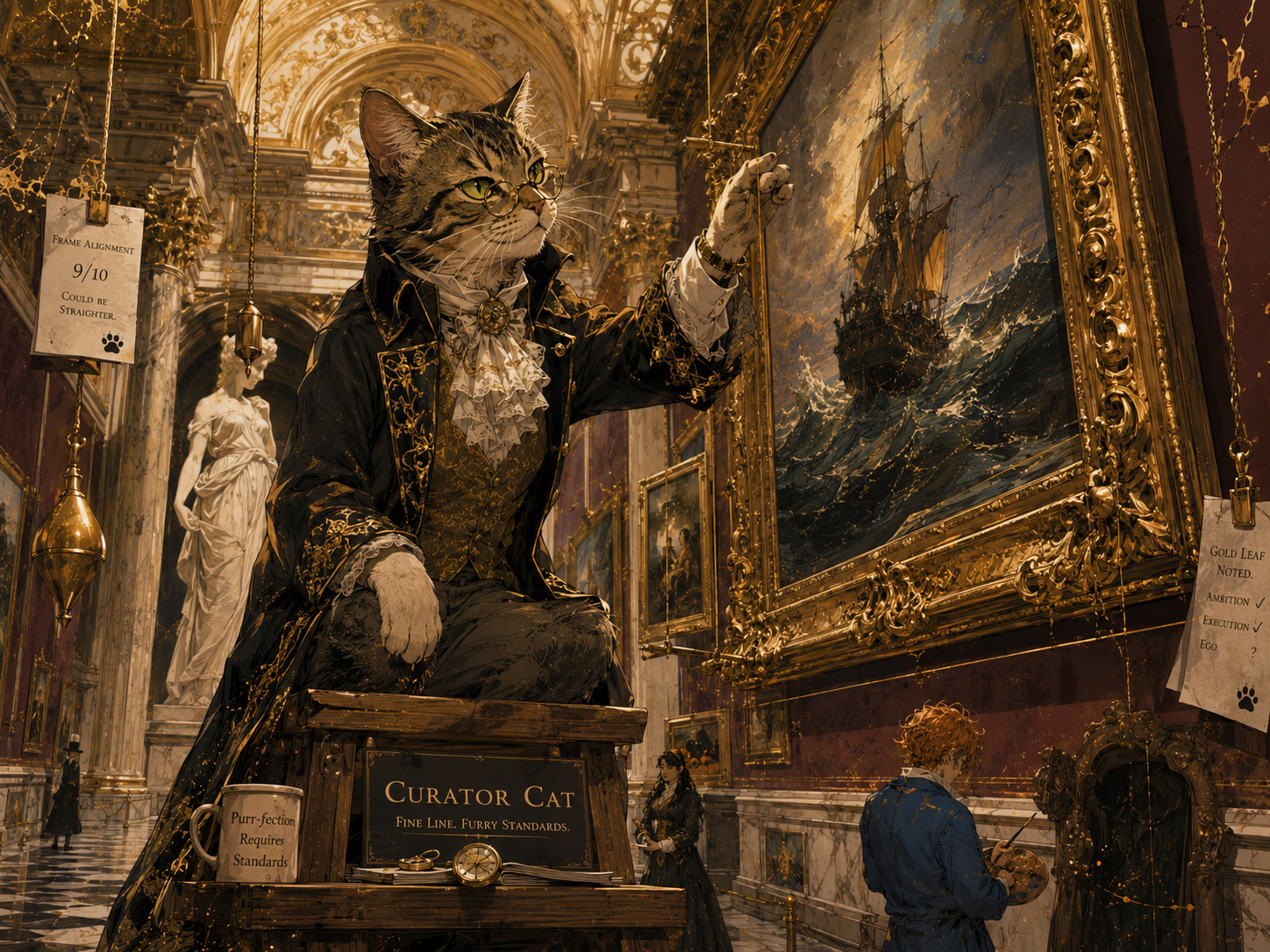
Curator Cat Gives the First Rule
Curator Cat hopped onto the bench, tail arranged like a museum rope. She did not blink.
The painting asks one question.
The visitor finally stopped moving. The gallery changed. The gold frame became a threshold. The shadows got deeper. The hand in the portrait stopped being “a hand” and became a decision. The background stopped being “background” and became weather, money, status, memory, and mood.
The visitor looked again. Not better. Not smarter. Just longer. That was enough to begin.
The FineArtDaily lesson
Episode 1 is the site’s thesis: art does not need viewers to pretend. It needs viewers to pause, notice, compare, and ask better questions.
- Look before reading. Give the image a moment before the label explains it.
- Notice what pulls your eye first. Artists arrange attention on purpose.
- Ask what changed. Light, pose, scale, material, and placement are all choices.
- Use the label as a tool. It gives clues, not the whole experience.
- Return to the image. The second look is usually where the painting starts talking.
Episode moral
Most paintings do not literally talk. But when you slow down enough, they start answering questions you did not know you had.
Slow down
Ten seconds can reveal composition, light, symbols, and emotion.
Look twice
The first look reacts. The second look discovers.
Ask clues
Who made it? What is emphasized? What is missing?