A museum comedy about not solving everything.
After Episode 1, the visitor had learned to slow down. Unfortunately, slowing down made one thing obvious: the smile was still not explaining itself.
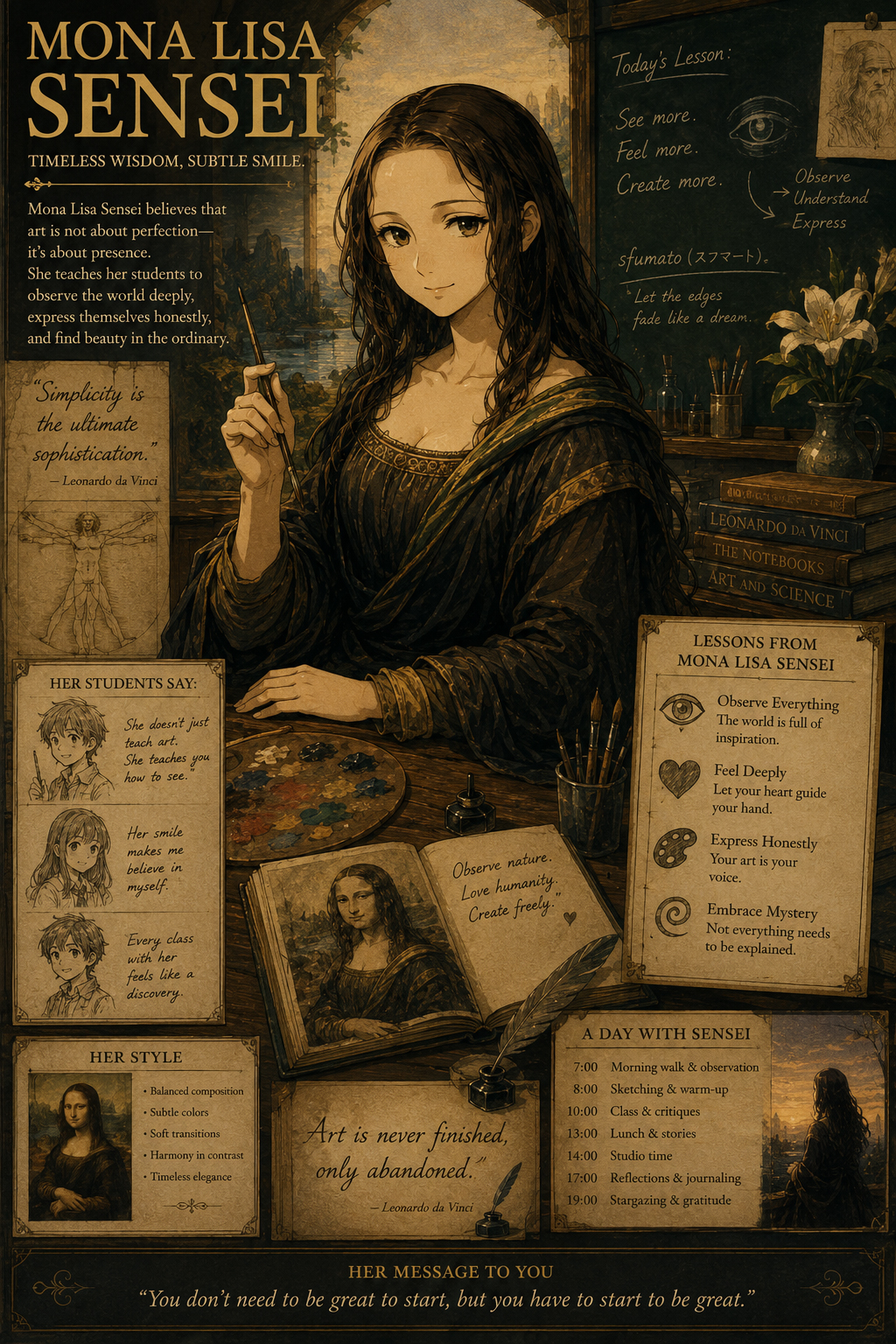
The Gallery Forms a Committee
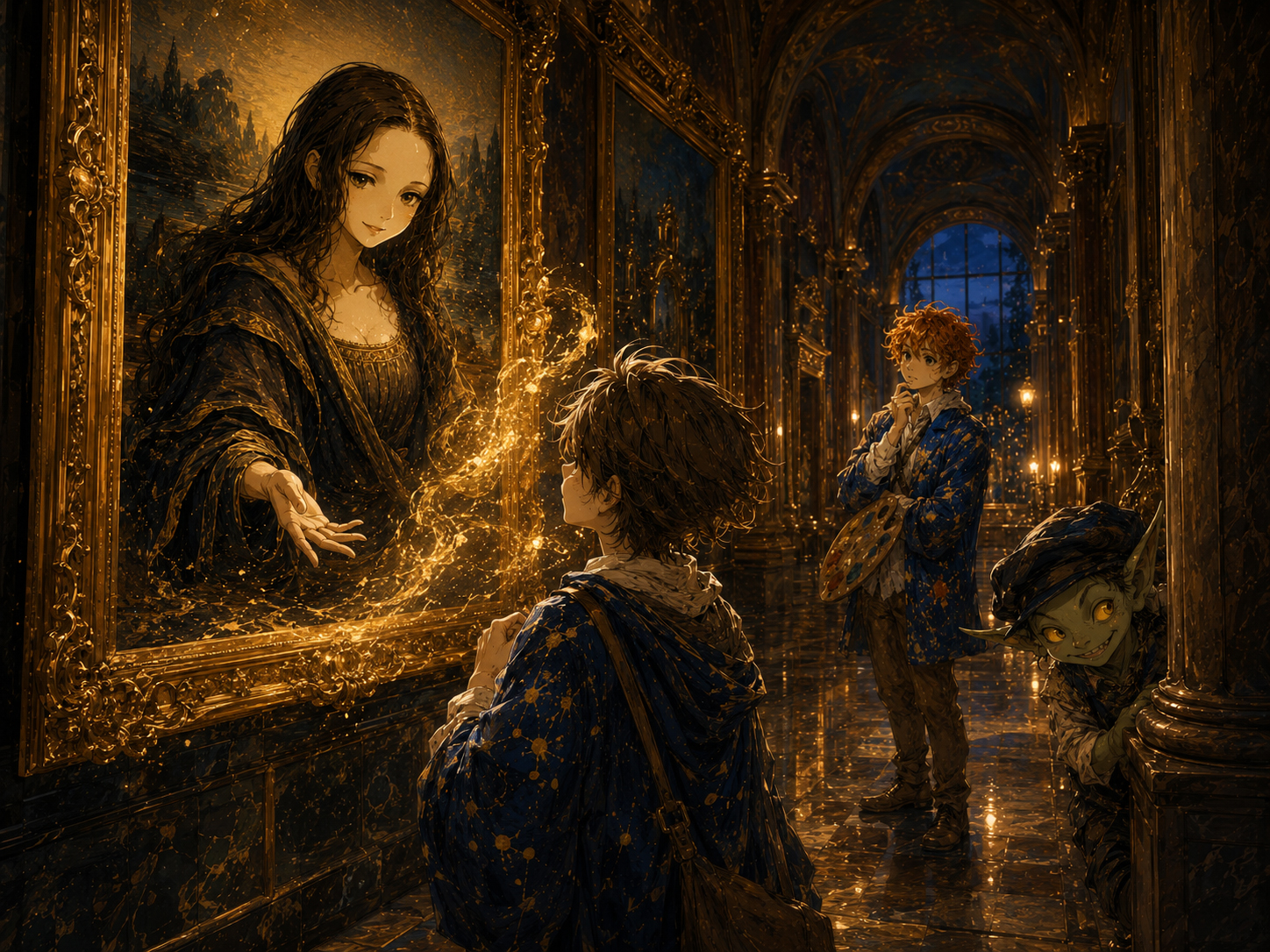
The visitor, Curator Cat, the Label Goblin, and three extremely confident tourists gathered before Mona Lisa Sensei. Everyone had a theory. Nobody had patience.
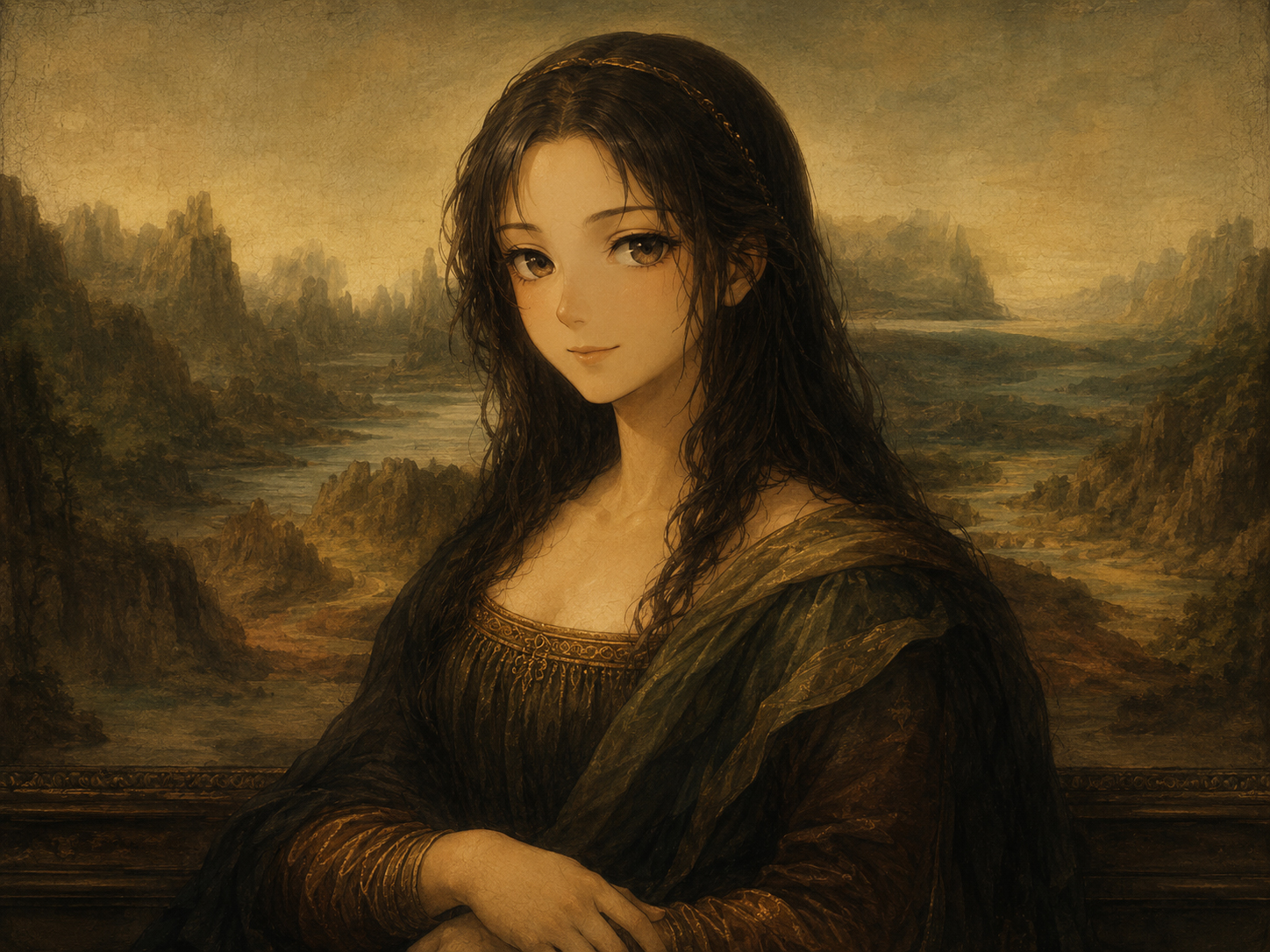
The Smile Does Not Cooperate
Mona Lisa Sensei folded her hands. The air became quieter. The frame seemed to grow older by several centuries.

The Secret-Letter Trap
The Label Goblin produced a scroll titled ONE DEFINITIVE MEANING. Curator Cat immediately sat on it. Professor Perspective quietly approved.
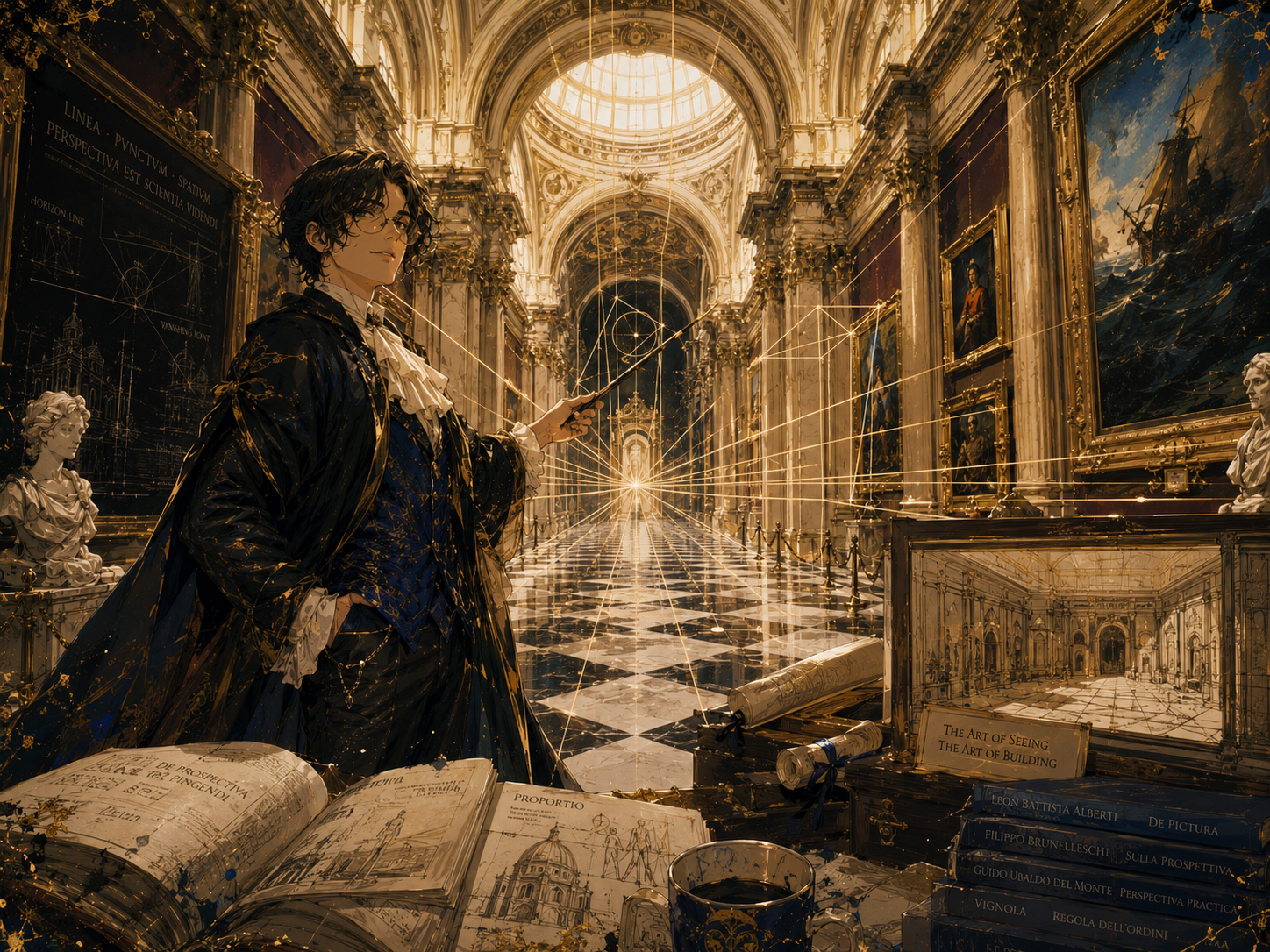
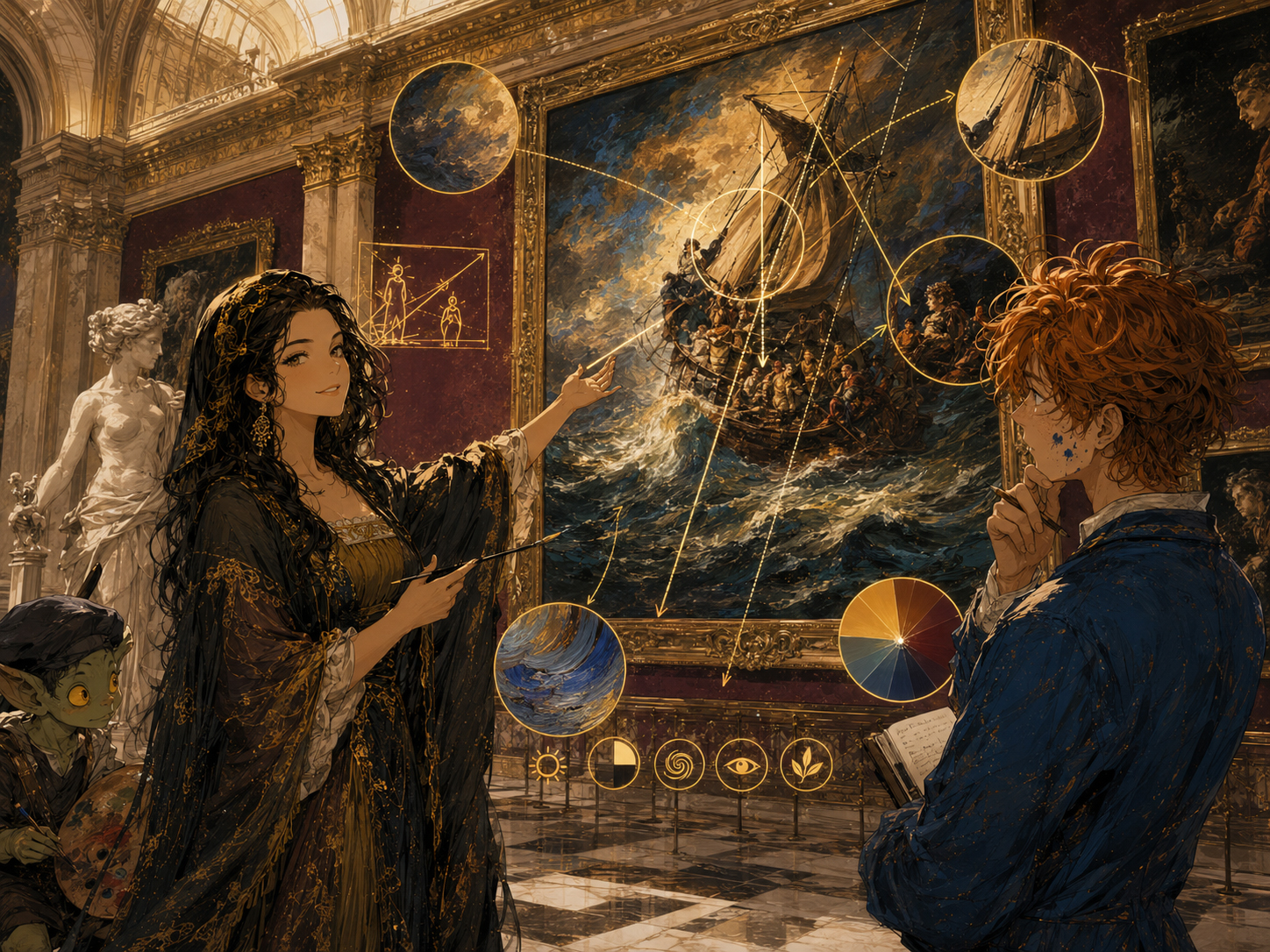
Professor Perspective Changes the Question
Golden guide lines appeared in the air, not to solve the smile, but to show how the painting keeps attention moving: mouth, eyes, hands, landscape, back again.
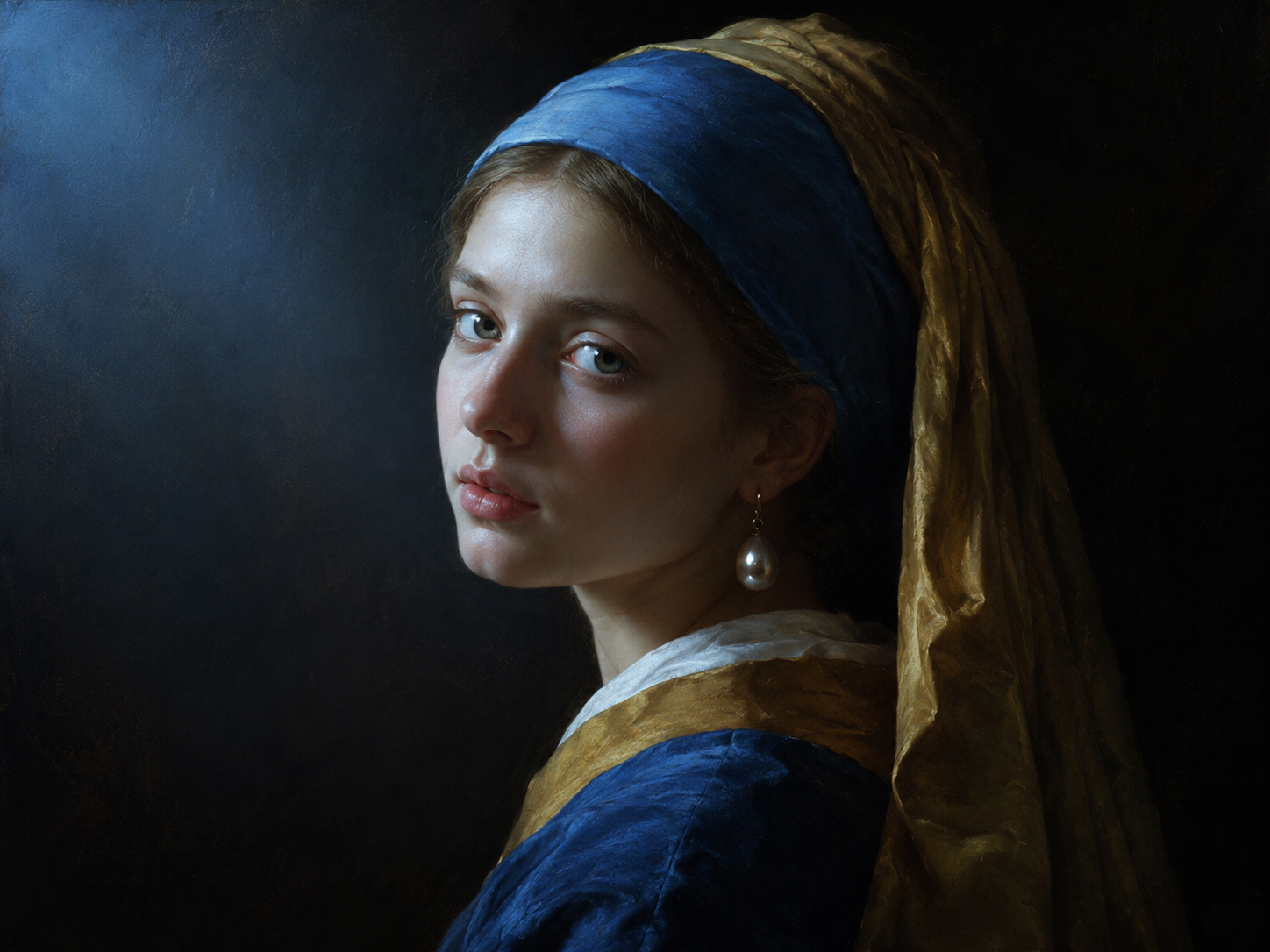
The Room Notices the Eyes
The visitor looked again. The smile was famous, yes, but the eyes were doing work. The hands were calm. The landscape was strange. The mood was balanced between welcome and distance.
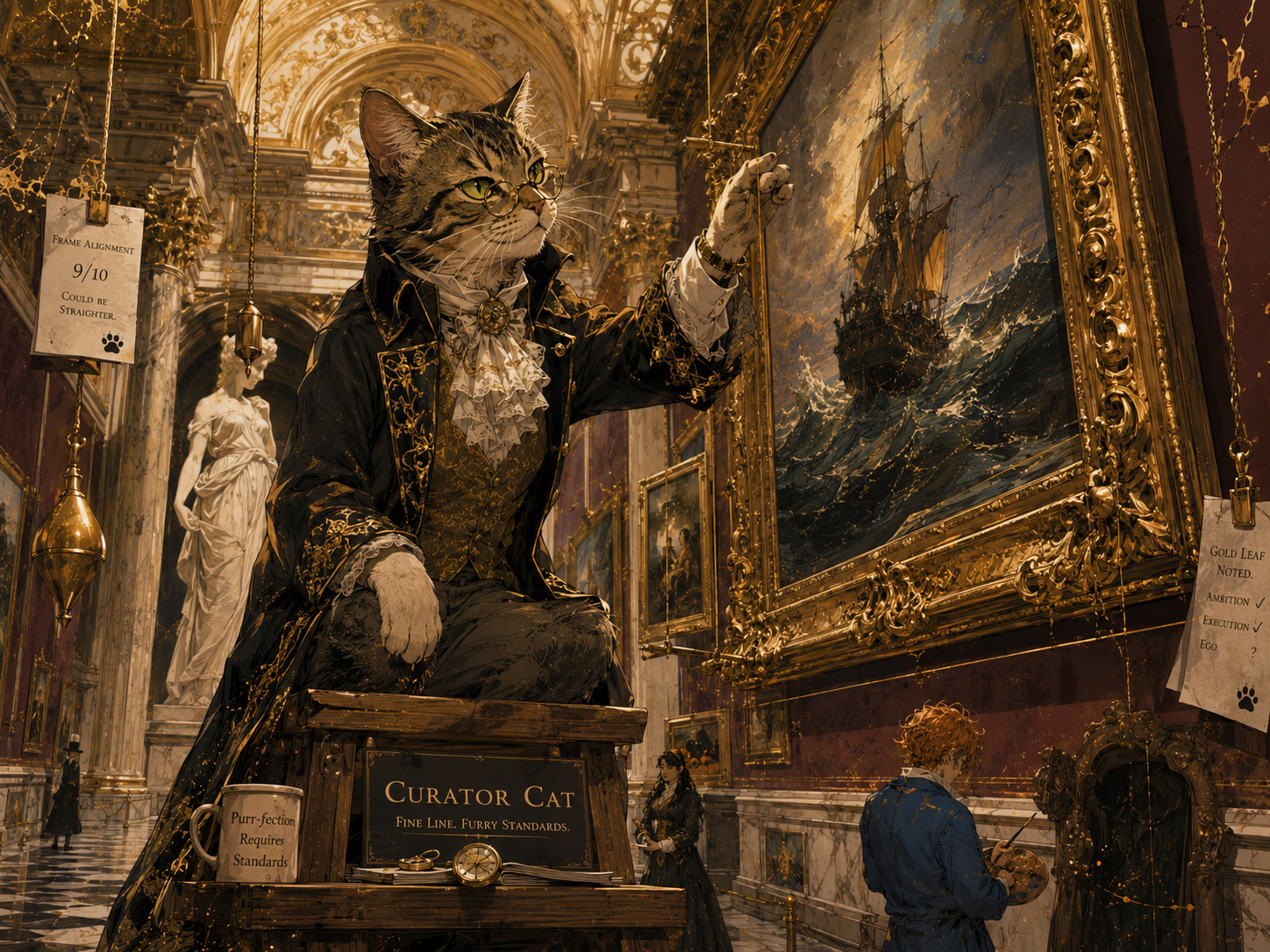
Curator Cat Issues the Ruling
Curator Cat climbed onto the bench and declared the case unresolved, which in museum law means successful.
The famous answer is not an answer.
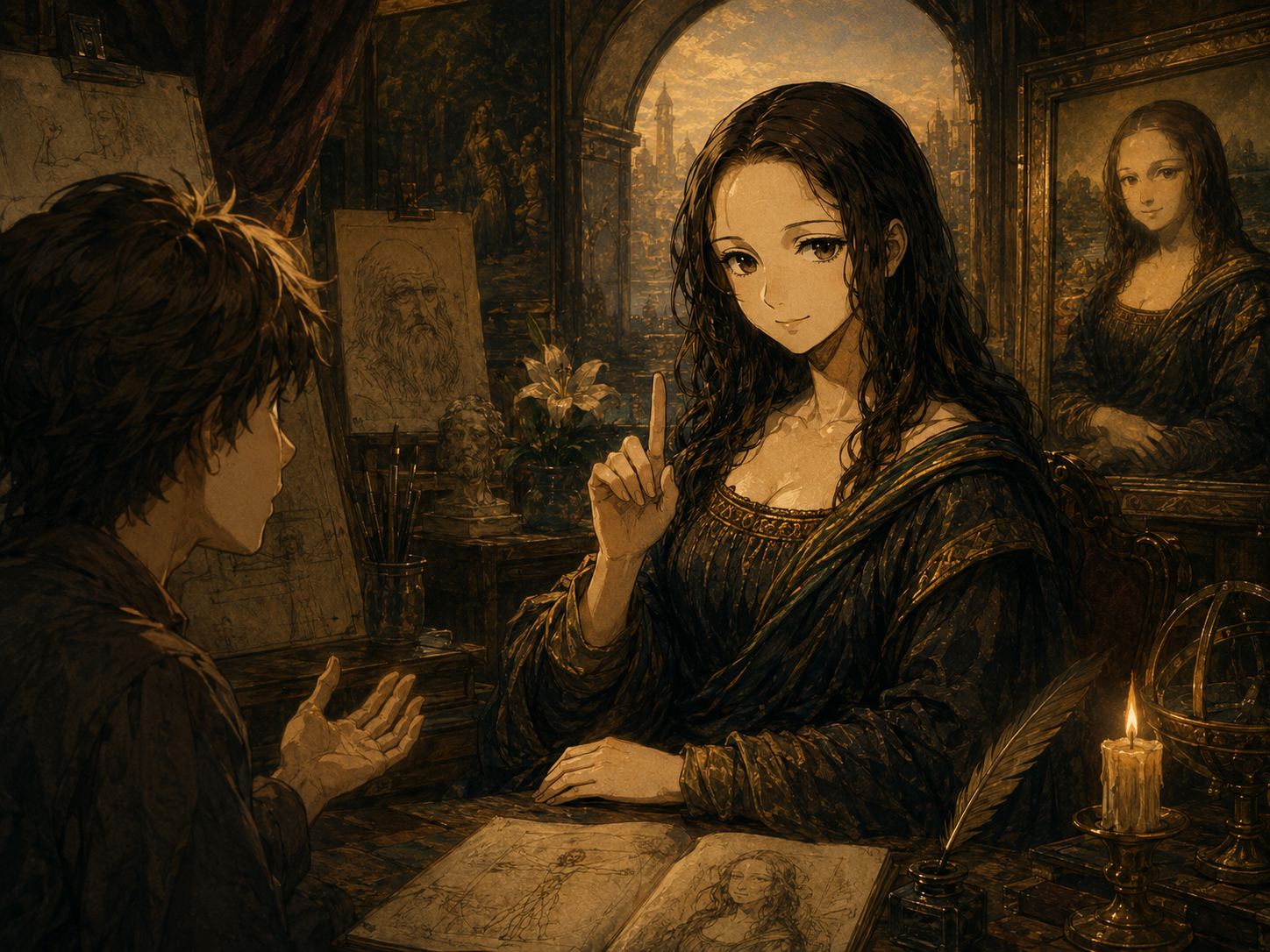
Mona Lisa Sensei does not refuse because she is hiding a single secret. She refuses because great art often works by holding several possibilities at once. It can be calm and strange. Near and distant. Familiar and impossible to pin down.
The visitor tried one last time: “But what is the smile supposed to mean?” Mona Lisa Sensei looked directly out of the frame.
The Smile Meter
The Label Goblin attempted to quantify the smile. This did not help, but the chart looked official.
The FineArtDaily lesson
Episode 2 teaches that interpretation is not the same as decoding. A code has one answer. A strong artwork can create a field of attention, emotion, history, and ambiguity.
- Do not rush to “what it means.” Start with what the painting makes you see.
- Track your attention. Where does your eye go first, second, and third?
- Notice contradictions. Calm plus tension. Beauty plus unease. Order plus mystery.
- Let ambiguity stay alive. Not every good question needs to be defeated.
- Return later. Some paintings change because you change.
Episode moral
The most famous smile in art history does not need to confess. It needs a viewer willing to stay in the room with uncertainty.
Look longer
The mystery improves when you stop trying to flatten it.
Ask better
Move from “What is the answer?” to “How is this working?”
Keep wonder
Ambiguity is not failure. It is often the masterpiece’s engine.