FineArtDaily Manga File
Chapter One: The museum loses the sky.
At sunrise, FineArtDaily’s grand hall looks wrong. The gold frames are glowing. The marble floors are polished. The wall labels are crooked by exactly one nervous millimeter. But the skies inside the paintings are blank, the oceans look tired, and every shadow has lost its cool secret.
Curator Cat walks through the gallery with a ruler, a clipboard, and the expression of someone who has already written three disciplinary memos before breakfast.
Chapter Two: Palette Goblin explains nothing.
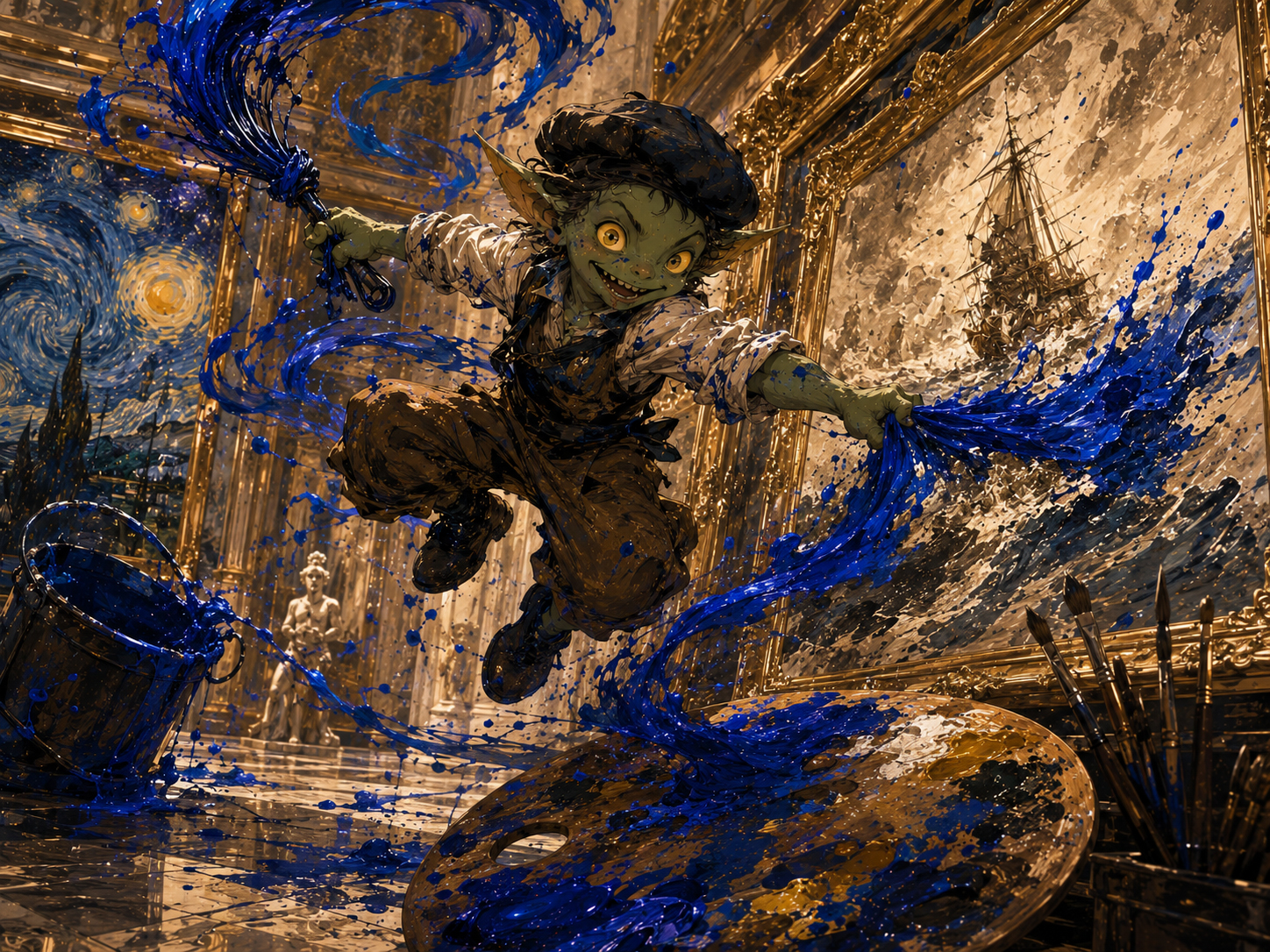
Behind a velvet rope, Palette Goblin is discovered sitting inside a huge overturned paint tube labeled Definitely Not Stolen Blue. His hands are blue. His hat is blue. His alibi is blue. Even his shadow is blue, which is suspicious because shadows are not supposed to look that pleased with themselves.
“I did not steal blue,” he says. “I relocated it for emotional research.”
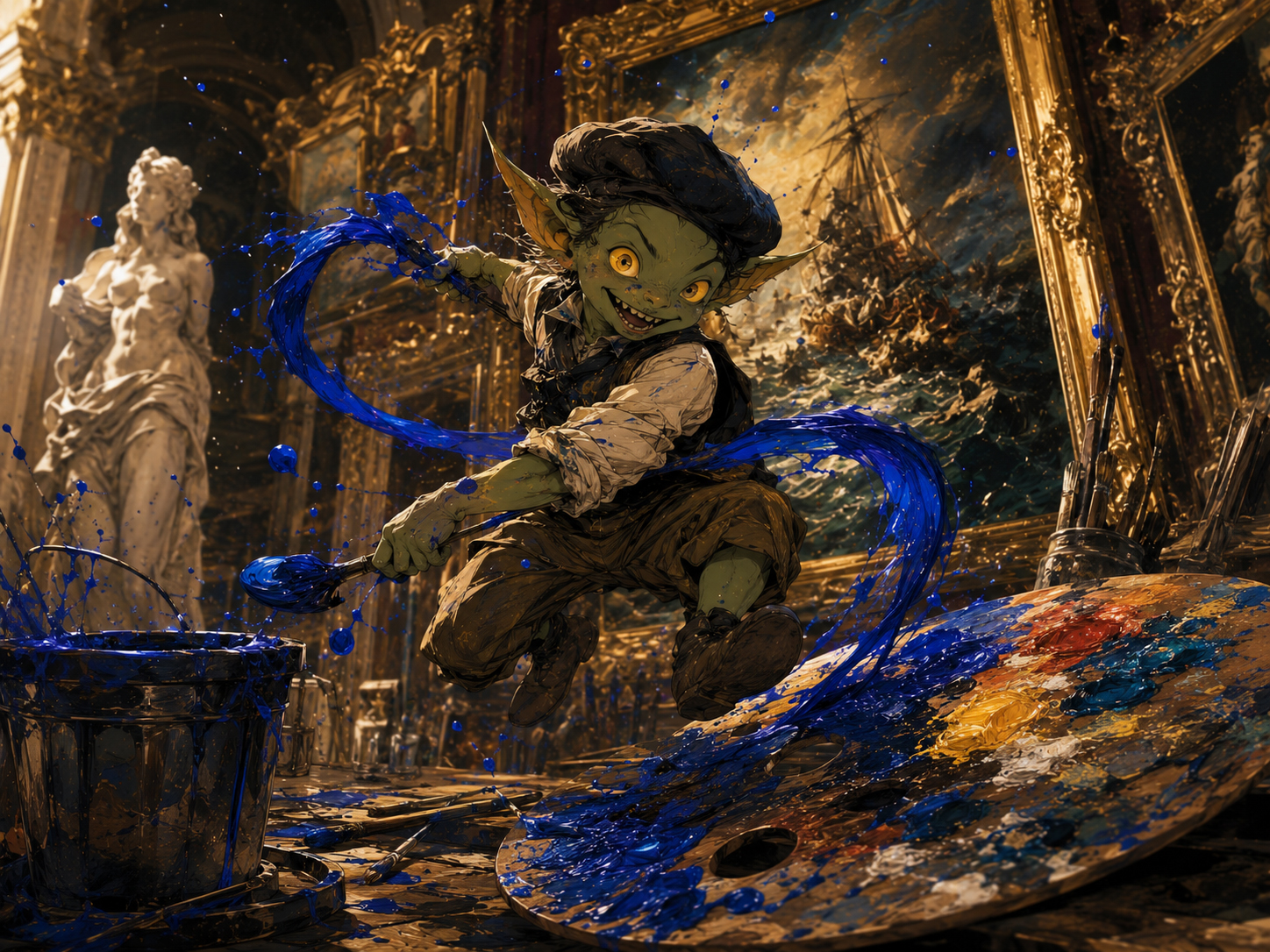
Suspect: Palette Goblin
Known crimes include rearranging rainbows, mislabeling mauve, and calling beige “a lifestyle choice.”
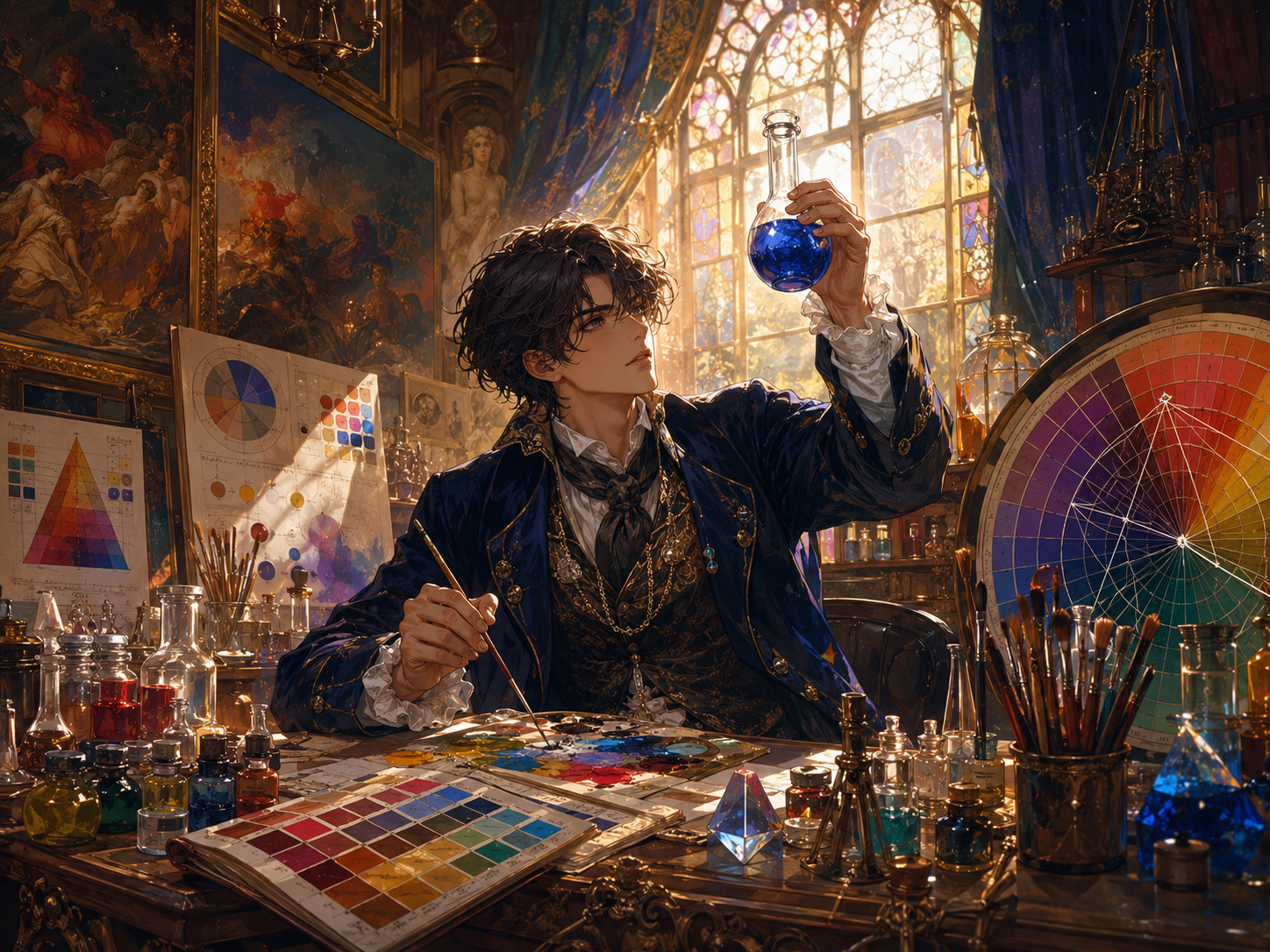
Evidence: The Color Lab
Blue is not just a hue. It changes temperature, distance, mood, rhythm, and the emotional weather of a painting.
Chapter Three: Mona Lisa Sensei refuses to panic.
Mona Lisa Sensei studies the blank sky in a landscape painting. She does not gasp. She does not accuse. She simply smiles in a way that makes the guilty party confess internally.
“Blue is not decoration,” she says. “Blue is distance. Blue is silence. Blue is air. Blue is the space between the viewer and the thing they cannot quite reach.”
Palette Goblin coughs into a stolen ultramarine handkerchief.
Chapter Four: Professor Perspective finds the missing depth.
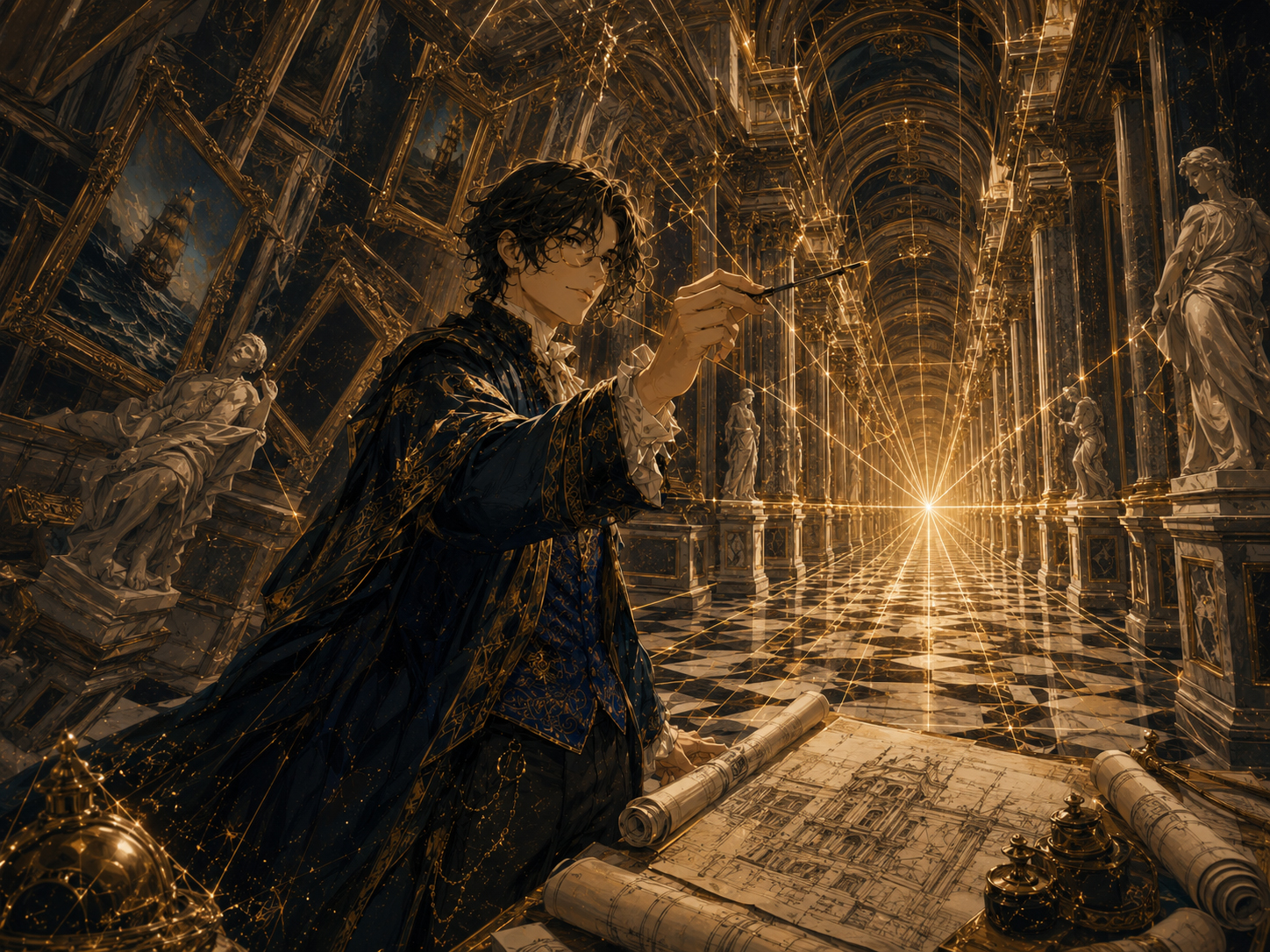
Professor Perspective draws a line from the foreground to the horizon. Without cooler colors in the distance, every mountain appears to jump forward like it has terrible museum manners.
He explains that color can create depth. Warm colors often feel closer. Cool colors often feel farther away. Value shifts can make a sky recede, a river breathe, and a figure feel surrounded by atmosphere rather than pasted onto a background.
Blue changes what a painting feels like.
Blue can suggest distance, night, calm, melancholy, holiness, cold, elegance, atmosphere, shadow, or infinity. It is not always “sad,” but it often carries emotional space. That is why stealing blue makes an entire museum feel flat, hot, and slightly embarrassed.
Chapter Five: The Goblin returns the blue, mostly.
Curator Cat gives Palette Goblin one chance to restore the gallery. The goblin squeezes blue back into skies, robes, waves, shadows, porcelain bowls, and one tiny decorative bird who had been emotionally beige for twenty minutes.
The gallery exhales. The oceans deepen. The night paintings regain their hush. The portraits look as if they have secrets again.
Palette Goblin bows. “I have learned that blue is powerful.”
Curator Cat writes on the clipboard: True, but still banned from the pigment cabinet.
Chapter Six: What to notice next time.
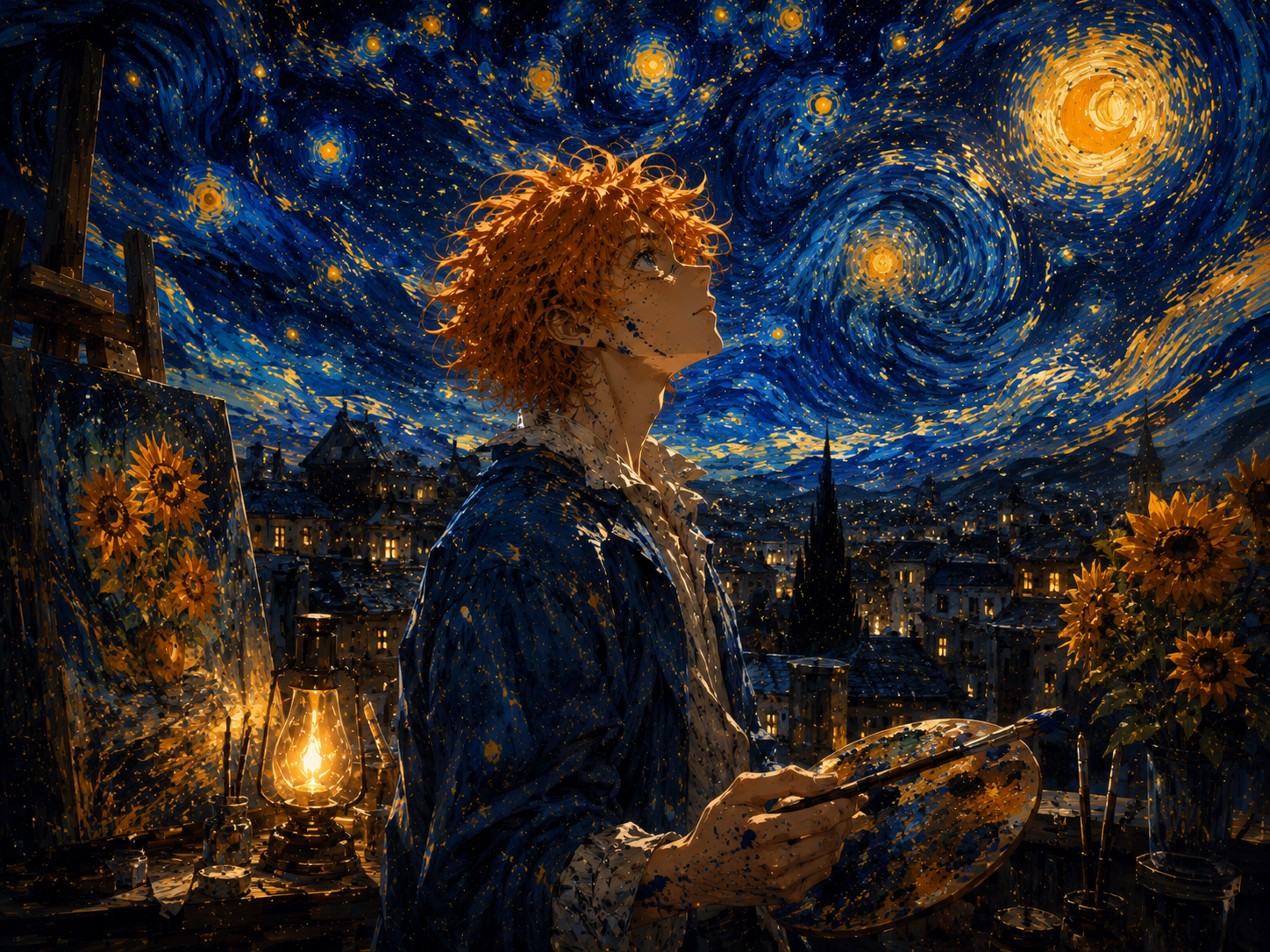
When you look at a painting, ask where the blue is doing work. Is it cooling a shadow? Pushing mountains into the distance? Making a robe feel sacred? Turning a room quiet? Making yellow flowers explode with contrast?
Then ask the dangerous FineArtDaily question: what would this painting lose if the blue disappeared?